Author
Books like Susan Power
3 books we recommend to Susan Power readers, drawn from The Grass Dancer — each with the reason why.
If you loved The Grass Dancer
Nanapush, an elderly storyteller, recounts how he rescued the formidable Fleur Pillager after an epidemic; Pauline offers a second, sharply conflicting version of their community’s past. Their alternating testimonies make truth communal, unstable, and inseparable from the teller—exactly the kind of narrative electricity that animates The Grass Dancer.
This is one of the most concentrated novels in Erdrich’s celebrated interconnected body of work. Its humor, menace, spiritual ambiguity, and unforgettable women are compressed into fewer than 250 pages. Fleur in particular has the force of someone who existed before the novel and will outlive it. Missing Tracks would mean missing one of the finest demonstrations of how a novel can feel like inherited memory.
Carpentaria begins with an ancestral serpent shaping the land around the fictional Gulf town of Desperance, then expands into feuding families, contested stories, environmental destruction, prophecy, and comedy. Alexis Wright’s Waanyi world is far from Susan Power’s Dakota communities, but the deeper kinship is unmistakable: ancestral knowledge is not decorative folklore but an active way of understanding place, history, and power.
Wright’s voice can be biblical, mischievous, furious, and intimate within a single passage. The novel asks readers to surrender to its tides rather than march through conventional chronology, and that surrender is richly rewarded. Winner of Australia’s Miles Franklin Award, Carpentaria is a major work of Indigenous fiction—wildly original, politically fierce, and large enough to seem less written than weathered into being.
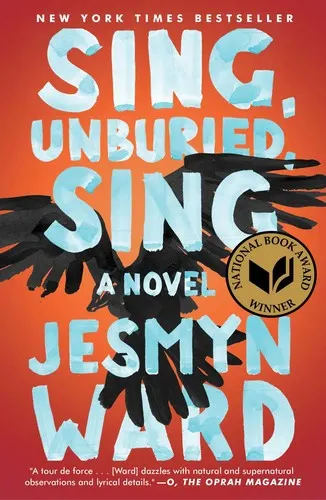
Thirteen-year-old Jojo is learning how to survive his turbulent family when his mother takes him and his little sister on a road trip across Mississippi. Around them, the dead remain urgently present, carrying stories that the living have neglected or refused to hear. Like The Grass Dancer, Ward’s novel treats haunting as both supernatural fact and the pressure of unfinished history.
What makes the book indispensable is its tenderness. Ward shifts among voices without flattening anyone into a villain or symbol; even disastrous choices emerge from grief, hunger, and damaged love. The prose is sensuous but unsentimental, and Jojo is an extraordinarily compelling moral center. Sing, Unburied, Sing won the National Book Award, but its lasting distinction is more intimate: it leaves readers feeling that listening to the dead may be one of the living’s deepest obligations.