Author
Books like Sue Burke
3 books we recommend to Sue Burke readers, drawn from Semiosis — each with the reason why.
If you loved Semiosis
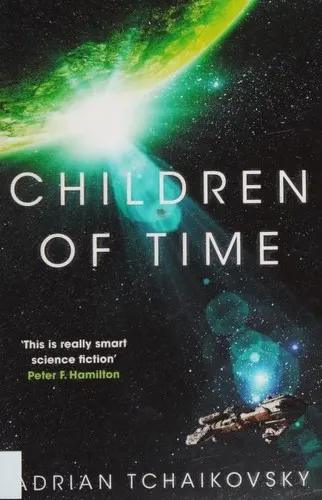
Like Semiosis, this novel finds its deepest drama in intelligence emerging outside humanity’s preferred definitions. Tchaikovsky follows civilizations across generations, making evolutionary change feel both epic and personal; habits become institutions, misunderstandings become history, and biology shapes culture in wonderfully concrete ways.
Winner of the Arthur C. Clarke Award and now a modern science-fiction touchstone, Children of Time delivers tremendous scale without sacrificing intellectual intimacy. Its great exhilaration is watching unfamiliar minds solve familiar problems by startlingly unfamiliar means. If Semiosis made you delight in having your assumptions about civilization quietly dismantled, this is indispensable.
Slonczewski’s classic asks whether cooperation, ecological knowledge, and resistance can form a genuine alternative to domination rather than merely an idealistic retreat from it. On the ocean world of Shora, a society of women has developed a rigorous way of living within a complex biosphere—one that outsiders mistake for weakness because they cannot read its strength.
A winner of the John W. Campbell Memorial Award, the novel has earned lasting devotion for treating biology, politics, and ethics as inseparable. Semiosis readers will recognize its patient attention to reciprocity: adaptation is not surrender, and understanding an ecosystem means entering into obligations. Few novels make nonviolent power feel so practical, difficult, and radical.
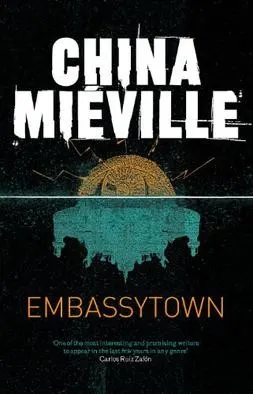
The thrill here is the painstaking encounter with a consciousness that does not fit human categories. On a distant world, human diplomats communicate with the native Ariekei through a language whose workings expose just how casually people assume that words, truth, and thought must operate as they do for us.
Miéville turns an abstruse linguistic premise into a gripping crisis, but the novel’s real force lies in its refusal to make alienness decorative. Communication changes both parties; translation becomes dangerous; apparent limitations reveal an entirely different architecture of mind. Widely regarded as one of Miéville’s finest novels, Embassytown offers the same rare reward as Semiosis: the sensation of meeting the genuinely other rather than a human psyche in exotic costume.