Author
Books like Raven Leilani
3 books we recommend to Raven Leilani readers, drawn from Luster — each with the reason why.
If you loved Luster
Millie is a temporary office worker whose fantasies of reinvention keep colliding with fluorescent-lit economic reality. Butler turns workplace inanities, self-help language, and low-grade despair into viciously precise comedy.
Like Leilani, she understands precarity as more than an empty bank account: it colonizes attention, relationships, even the stories a person tells herself. The prose is colder and more compressed than Luster’s, but just as quotable and merciless. The New Me has become a touchstone of millennial workplace fiction because it refuses both inspirational recovery and glamorous collapse; its bleakness is so exact that it becomes exhilarating.
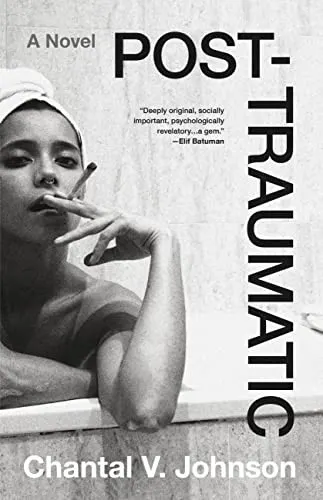
Vivian, a Black public defender in New York, is brilliant at diagnosing power and disastrous at escaping her own compulsions. Johnson grants her the freedom to be vain, funny, cruel, needy, politically perceptive, and spectacularly self-defeating without turning her into a lesson in likability.
That refusal will feel vital to a reader who loved Edie. Both novels expose the gap between knowing exactly how race, class, sex, and beauty operate and being no less vulnerable to them. Post-Traumatic is harsher and more confrontational, pushing its heroine’s appetite for damage until every page feels electrically unsafe. It is the rare debut willing to trust that an unsanitized consciousness can hold a novel by force alone.
Alex survives by reading rooms: who has money, what they want from her, which breach of etiquette can be forgiven, and when charm will stop functioning as currency. After being expelled from a wealthy man’s Long Island house, she begins drifting through spaces where she does not quite belong.
Cline’s Booker-longlisted novel shares Luster’s fascination with the minute calculations behind transactional intimacy, but its effect is different: cool, suspenseful, almost hallucinatory. The social world becomes a system of locked doors, and Alex’s improvisations generate unbearable tension. Cline makes complicity feel physical—you see every warning sign, understand every terrible choice, and keep following anyway.