Author
Books like Q5878
3 books we recommend to Q5878 readers, drawn from One Hundred Years of Solitude — each with the reason why.
If you loved One Hundred Years of Solitude
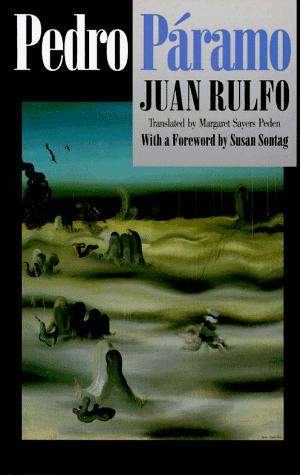
Juan Preciado travels to the village of Comala in search of the father he has never known, only to find a place where voices, memories, and the dead seem to occupy the same air. Rulfo treats the supernatural with the same grave matter-of-factness García Márquez does, but his style is starker: fragments of speech emerge from heat, dust, and silence until a whole ruined community becomes audible.
Published twelve years before One Hundred Years of Solitude, this short Mexican masterpiece was a decisive influence on García Márquez. Its astonishing compression makes it feel inexhaustible rather than slight; readers return to it because every rereading rearranges its whispers into a new pattern. Anyone who loves how Macondo turns history into haunting should experience Comala, one of Latin American fiction’s foundational places.
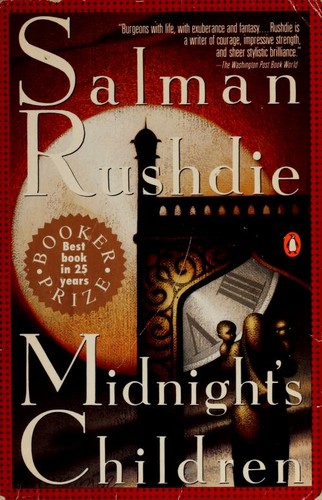
Saleem Sinai is born at the exact moment India becomes independent, and narrates his family’s life as if national history, bodily accident, gossip, myth, and personal vanity were inseparable. His voice is the great attraction: extravagant, funny, unreliable, self-correcting, and constantly threatening to overflow the story meant to contain it.
Like the Buendía chronicle, this is a family saga in which private lives become entangled with public violence and historical time refuses to move neatly forward. Yet Rushdie’s linguistic fireworks and argumentative narrator make the experience wholly his own. Winner of the Booker Prize—and later twice chosen as the finest Booker winner—it remains one of the rare novels whose ambition is matched by its vitality. If García Márquez made you crave fiction that attempts to swallow a century whole, this is indispensable.
Primeval is a Polish village watched over by four archangels, but Tokarczuk builds it from intimate, sharply focused pieces: a woman waiting for her husband, children inventing private cosmologies, families repeating injuries, and wars passing through lives that cannot comprehend their scale. Humans, animals, objects, and even time itself receive their own perspectives, giving the village the completeness of a miniature universe.
The kinship with One Hundred Years of Solitude lies less in marvels than in vision: both novels see history as cyclical, domestic, absurd, and merciless, while preserving wonder amid loss. Tokarczuk—later awarded the Nobel Prize—writes with greater coolness and compression than García Márquez, and that difference is part of the pleasure. Primeval is one of her most beloved novels and the ideal doorway into her work: modest in length, immense in imaginative reach.