Author
Books like Pat Barker
3 books we recommend to Pat Barker readers, drawn from Regeneration — each with the reason why.
If you loved Regeneration
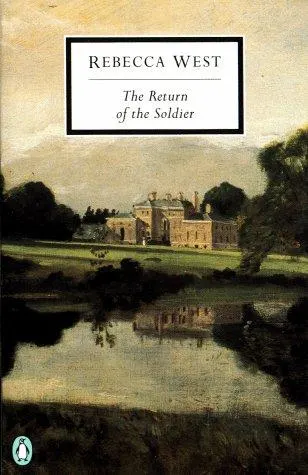
A shell-shocked officer returns from war having lost fifteen years of memory, and the women around him must decide what recovery should mean. West turns that stark premise into a merciless question: if a cure restores someone to misery and obligation, is it still a cure?
Published in 1918, this compact modernist classic anticipates Barker’s fascination with psychiatry as both liberation and social enforcement. Its shifts of sympathy among wife, cousin and former lover expose the class assumptions concealed inside apparently humane choices. Few novels accomplish so much in so little space; its final pages have the concentrated, disturbing force of a moral verdict.

Wounded at Dunkirk, Laurie Odell recuperates in a hospital while trying to understand both his desires and the competing models of manhood offered by the people around him. What follows is not simply a love story but a sustained argument about honor, self-knowledge and the damage caused by compulsory silence.
Like Barker, Renault trusts charged conversations, restrained gestures and what men cannot permit themselves to say. Her only contemporary novel, it has inspired unusually devoted readers since its 1953 publication, especially for refusing to make queer life either sentimental or sordid. Its intelligence about desire under pressure makes it feel less like a period artifact than a secret classic still finding its audience.

Alfa Ndiaye, a Senegalese rifleman fighting for France, begins narrating after the death of the friend beside him. His voice is intimate, repetitive and increasingly hypnotic, turning military courage into something terrifyingly unstable.
Diop shares Barker’s interest in the machinery that manufactures acceptable masculinity, but adds the brutal contradiction of colonial soldiers ordered to perform a supposedly ‘savage’ ferocity for a European army. The translation by Anna Moschovakis preserves the novel’s incantatory momentum, in which grief, guilt and sanctioned violence become impossible to separate. Winner of the International Booker Prize, it is brief enough to read in a sitting and potent enough to haunt the mind far longer.