Author
Books like Omar El Akkad
3 books we recommend to Omar El Akkad readers, drawn from American War — each with the reason why.
If you loved American War
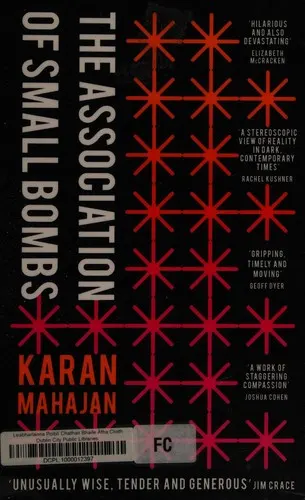
A bomb detonates in a Delhi marketplace, killing two schoolboys. Mahajan then follows the shock wave outward—through their grieving families, a surviving friend, and the militants for whom suffering can become both grievance and raw material.
Like American War, this National Book Award finalist refuses the comforting fiction that terrorists are born fundamentally different from everyone else. It studies radicalization as a volatile compound of humiliation, loneliness, conviction, accident, and the desire to matter. Mahajan’s unsparing shifts of perspective make perpetrators intelligible without absolving them, while his exact attention to bereavement shows how political violence keeps exploding long after the blast. Few novels examine terrorism with such moral nerve.
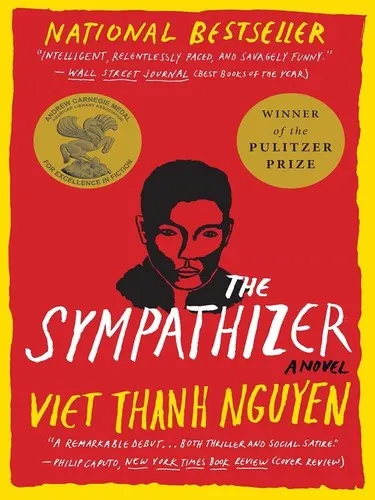
Nguyen’s narrator introduces himself as a communist double agent embedded in the defeated South Vietnamese regime: a man with two loyalties, two ways of seeing, and no clean place to stand. His confession is intimate, cerebral, savagely funny, and increasingly haunted by what political commitment demands.
Readers drawn to Sarat Chestnut’s transformation will recognize Nguyen’s fascination with the point where historical injury becomes ideology—and ideology becomes permission. But the Pulitzer Prize-winning The Sympathizer adds a dazzling argument about storytelling itself: who gets to describe a war, whose pain becomes scenery, and how nations edit their crimes into noble myths. Its voice is so charismatic and compromised that reading it feels like being recruited and cross-examined at once.
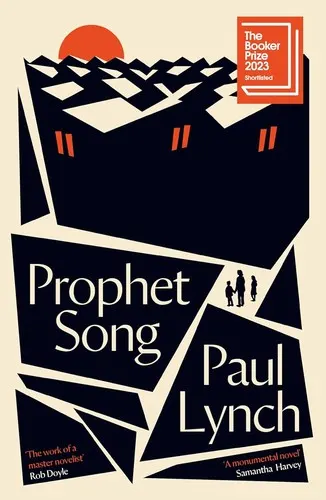
It begins with a knock at the door. Ireland’s newly empowered secret police want to question Larry Stack, a trade-union official; his wife, Eilish, tries to preserve the ordinary machinery of family life as the country tightens around them.
American War made civil conflict and displacement happen to Americans, stripping away the distance with which wealthy nations often regard other people’s catastrophes. Paul Lynch’s Booker Prize-winning novel performs a similarly devastating reversal. Its rushing, nearly airless prose traps you inside Eilish’s calculations—food, children, aging parents, which danger is real, when leaving becomes more perilous than staying. This is not speculative politics as an intellectual puzzle; it is the bodily experience of watching normality disappear one concession at a time. Once its pressure takes hold, the novel is extraordinarily hard to put down.