Author
Books like Mildred D. Taylor
3 books we recommend to Mildred D. Taylor readers, drawn from Roll of Thunder, Hear My Cry — each with the reason why.
If you loved Roll of Thunder, Hear My Cry

Curtis begins with the hilarious, quarrelsome Watson family at home in Flint, Michigan, then gradually reveals how vulnerable their warmth is to the country beyond their door. Like Cassie Logan, Kenny Watson watches the adults and older children around him until experience forces him to understand dangers he cannot dismiss as merely unfair.
A Newbery Honor book beloved for decades, it earns its power through tonal range: slapstick sibling warfare, parental tenderness, shame, fear, and racist violence all belong to the same convincing childhood. Readers who loved how Taylor makes history personal—not an abstraction but something that enters a family’s life—should not miss Kenny’s unforgettable voice.
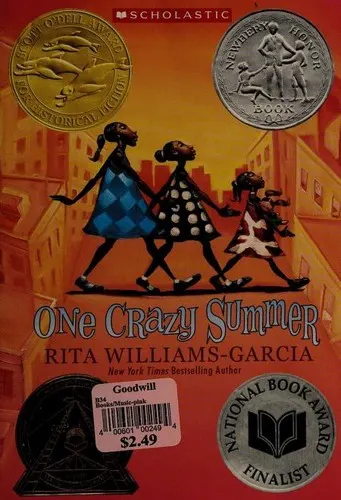
Eleven-year-old Delphine arrives in Oakland in 1968 with two younger sisters to manage, a mother she barely knows, and firm ideas about how everyone ought to behave. Her disciplined, observant narration has the same appeal as Cassie’s: she is intelligent without understanding everything, proud without being invulnerable, and forced to revise what she thinks she knows about family and resistance.
Williams-Garcia fills the novel with concrete pleasures—sisterly bickering, carefully counted money, unexpected meals, poems, and a summer program run by the Black Panthers—while refusing to simplify either political conviction or parental failure. Its Newbery Honor and devoted readership are well deserved: Delphine feels not like a lesson from history but like someone whose hard-won judgments matter.
What binds this novel most deeply to Roll of Thunder is its understanding that land is never just scenery. For young Omakayas and her Ojibwe family, home holds livelihood, memory, identity, and obligations to one another. Erdrich builds that meaning patiently through work, teasing, storytelling, seasonal change, and the small frictions of family life, so that every threat to the community carries emotional weight.
This National Book Award finalist also performs a quiet literary correction: it places an Indigenous girl and her family at the center of nineteenth-century history, granting them the fullness older frontier stories often denied. Omakayas is funny, capable, jealous, frightened, and increasingly perceptive. Her world is different from Cassie Logan’s, but readers will recognize the same insistence that dignity survives through memory, kinship, and the determination to name one’s own experience.