Author
Books like Michael Swanwick
3 books we recommend to Michael Swanwick readers, drawn from The Iron Dragon's Daughter — each with the reason why.
If you loved The Iron Dragon's Daughter

The novel opens in Unthank, a sunless city where Lanark has no memory of his past and private maladies become grotesquely physical. Gray combines this nightmare with an intricately disordered coming-of-age story, repeatedly changing the terms on which we understand its hero.
Like Swanwick, he distrusts every institution claiming to educate, employ, heal, or save. Both novels use the machinery of fantasy to expose emotional isolation and social exploitation, while their structural tricks make identity itself feel unstable. Gray’s illustrated, self-interrupting debut became a landmark of modern Scottish literature; its influence is proportionate to its astonishing ambition. If you loved Swanwick’s refusal to make fantasy reassuring, Lanark is indispensable.
Three friends once attempted an occult act whose consequences still cling to their ordinary English lives. Harrison is less interested in explaining the supernatural than in showing how longing for another world can corrode this one.
That makes The Course of the Heart a close spiritual relative of Swanwick’s novel. Its magic is seductive, tawdry, metaphysically terrifying, and inseparable from self-deception; its invented paradise carries the ache of something remembered but perhaps never real. Harrison’s exact, chilly prose can make a kitchen or motorway feel as haunted as any mythic kingdom. Widely regarded as one of his finest novels, it is anti-fantasy of unusual emotional force: brief, elusive, and devastating.
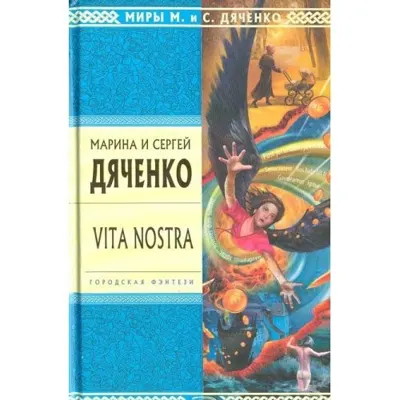
Sasha Samokhina’s seaside holiday is interrupted by a stranger who compels her to perform baffling tasks, using shame and impossible consequences as leverage. From that mundane beginning, Vita Nostra develops an education in which learning is not enrichment but the forced dismantling of the learner.
A reader of The Iron Dragon’s Daughter will recognize the cruel logic: lessons whose rules cannot be questioned, authority that treats terror as pedagogy, and adolescence rendered as literal metaphysical violence. Yet the Dyachenkos create their own distinctive pressure—claustrophobic, cerebral, and increasingly difficult to describe in ordinary language. The novel became a cult favorite in English translation because it delivers something many dark-academia fantasies only promise: knowledge that genuinely changes what a person is. Missing it means missing one of speculative fiction’s most unnerving accounts of transformation.