Author
Books like Michael Crichton
7 books we recommend to Michael Crichton readers, drawn from Jurassic Park, The Lost World and The Andromeda Strain — each with the reason why.
If you loved Jurassic Park
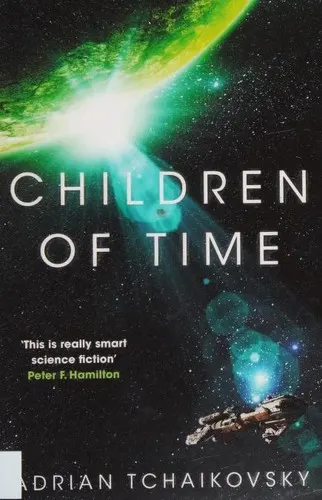
An ambitious experiment meant to accelerate intelligence on a terraformed planet goes wrong—but not in the way its architect expects. Across immense stretches of time, Tchaikovsky follows the astonishing consequences while a failing human ark searches for somewhere to survive.
Jurassic Park’s dinosaurs are compelling because they are never merely monsters: they learn, coordinate, and expose the poverty of their creators’ imagination. Children of Time takes that fascination with nonhuman intelligence much further, making evolution itself dramatic without sacrificing momentum or wonder. Winner of the Arthur C. Clarke Award and the beginning of a widely loved series, it offers the rare exhilaration of watching genuinely alien minds become comprehensible.
At first the incidents seem disconnected: strange organisms appear, marine animals behave inexplicably, and disasters begin along the world’s coasts. Scientists in several disciplines slowly recognize that these are not isolated curiosities but parts of a planetary pattern.
Schätzing builds suspense the way Crichton does at his best: observation becomes hypothesis, hypothesis becomes dreadful prediction, and every answer enlarges the danger. Marine biology, geology, climate, and engineering are not decorative research; they are the gears driving a vast cascade of failure. This German publishing phenomenon became an international bestseller because it delivers blockbuster scale while taking scientific reasoning seriously. Its accumulating sense that humanity has misunderstood the system surrounding it is pure Jurassic Park terror, expanded to an entire biosphere.
If you loved The Lost World
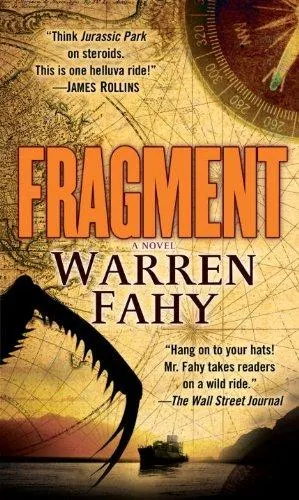
A research vessel intercepts a distress signal from an isolated island—and discovers an ecosystem shaped by evolutionary pressures unlike any elsewhere on Earth. The attraction is not simply that dangerous organisms pursue scientists. Fahy makes biology itself the engine of the thriller: every new observation revises the researchers’ understanding of what can hunt, survive and reproduce.
Like Crichton, Fahy knows that an explanation can sharpen fear rather than interrupt it. The scientists must reason under pressure, while the island’s creatures feel like products of a coherent natural system instead of arbitrary monsters. Few novels come closer to reproducing The Lost World’s exhilarating cycle of discovery, theory and suddenly necessary escape.
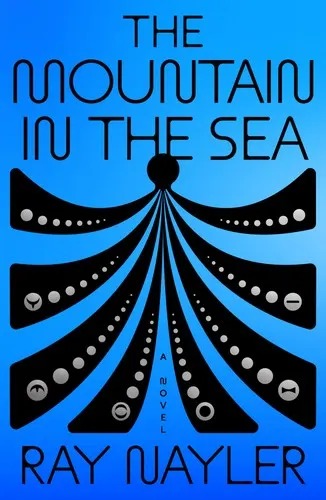
On a corporate-controlled island, marine biologist Dr. Ha Nguyen studies an octopus population that may possess a startling form of intelligence. The novel begins from one of Crichton’s most compelling ideas: humanity encounters something extraordinary, then immediately tries to classify, exploit and contain it.
Nayler trades some of Crichton’s velocity for haunting intellectual suspense. Scientific observation, artificial intelligence, corporate secrecy and ecological violence converge around a deceptively simple question: would humans recognize another kind of mind before destroying it? Winner of the Locus Award for Best First Novel, it offers the rare pleasure of a thriller whose ideas become more destabilizing the longer one considers them.
If you loved The Andromeda Strain
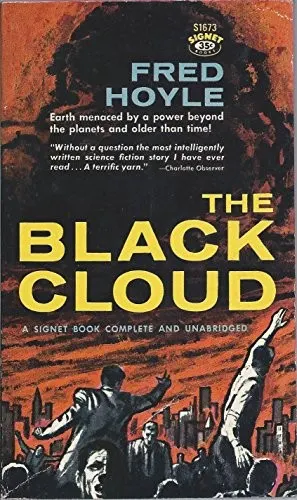
Astronomers discover that a vast dark cloud is approaching the solar system, and the ensuing drama belongs not to swaggering heroes but to scientists arguing from incomplete evidence. Like Crichton, Hoyle makes measurement, hypothesis, disagreement, and revision intensely suspenseful.
Hoyle was himself a major astrophysicist, and the novel’s authority comes from how naturally its characters think: every apparent answer creates a more disturbing question. This hard-SF classic offers the rare pleasure of watching intelligence confront something genuinely alien—and discovering that intelligence may not be enough.
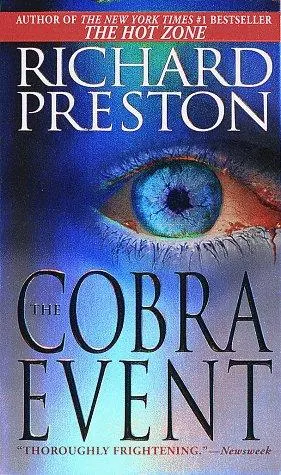
A teenager’s inexplicable death draws a medical investigator into evidence of an engineered biological attack. Preston renders autopsies, epidemiology, and pathogen design with the same unnerving specificity that makes Crichton’s underground laboratory so convincing: expertise is the action, not decoration around it.
The novel’s biological threat is more visceral than Andromeda’s, but its deepest horror is similarly systemic—the realization that modern scientific power can outrun the institutions meant to control it. Preston, celebrated for The Hot Zone, made the danger feel plausible enough to alarm President Bill Clinton and prompt questions to national-security advisers. Few thrillers have crossed so effectively from page-turning nightmare into public warning.
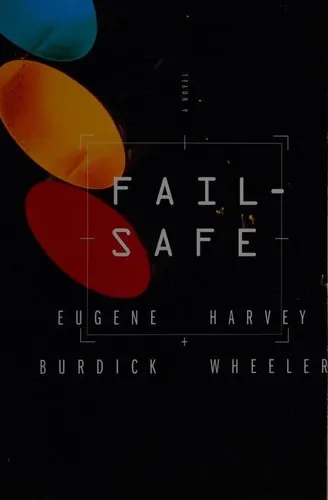
Fail-Safe replaces the microorganism with a command system, yet it shares Crichton’s coldest and most compelling insight: catastrophe can emerge without a villain, simply because an intricate machine behaves exactly as designed at the wrong moment. A routine military alert becomes an irreversible crisis, tracked through control rooms, protocols, terse conversations, and narrowing options.
The prose is lean, the escalation merciless, and every capable person is trapped by the logic of the system they serve. A defining Cold War bestseller later adapted by Sidney Lumet, it remains one of the purest procedural thrillers ever written. If Wildfire’s checklists and safeguards fascinated you as much as its alien organism, Fail-Safe is essential.