Author
Books like May Sinclair
3 books we recommend to May Sinclair readers, drawn from Life and Death of Harriett Frean — each with the reason why.
If you loved Life and Death of Harriett Frean
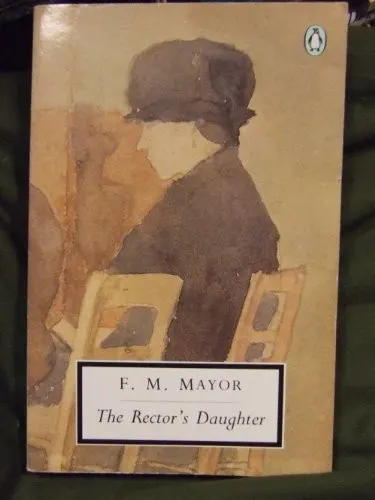
Mary Jocelyn has spent decades caring for her demanding father in an English parsonage, accepting self-effacement as both duty and identity. When emotional possibility finally enters her life, Mayor reveals—through glances, pauses, and painfully civilized conversations—how thoroughly Mary has been trained not to claim happiness.
Like Sinclair, Mayor writes without sentimentality yet makes the smallest renunciation feel momentous. This 1924 novel has endured as a quietly revered masterpiece of women’s inner lives. Its apparent modesty is deceptive: few novels diagnose the moral vanity hidden inside self-sacrifice with such tenderness or force.
Delafield follows Alex Clare from a childhood governed by approval, punishment, and the requirement to be ‘good.’ Alex absorbs every lesson too well, learning to distrust her desires while lacking the sanctioned gifts—beauty, charm, social ease—that might make obedience bearable.
The kinship with Harriett Frean lies in the terrible conversion of social expectations into an inner voice. Delafield’s irony is sharper and angrier than Sinclair’s, but equally exact; she shows character being manufactured before showing its consequences. Long neglected and later recovered by Persephone Books, this is one of the most devastating novels about how a life can be ruined without any single person intending cruelty.
Muriel Hammond grows up amid the marriage market and rigid respectability of provincial society, where a woman’s future seems to depend on being chosen. Holtby makes that familiar arrangement feel freshly grotesque by showing how it colonizes Muriel’s imagination: she measures herself through other people’s judgments even when no one is speaking.
Holtby gives the story more social breadth than Sinclair, surrounding private repression with suffrage politics, war, friendship, and changing possibilities for women. Yet her deepest subject is the same dangerous confusion between virtue and passivity. A major work by the author of South Riding, The Crowded Street offers the rare satisfaction of watching a superbly drawn consciousness encounter alternatives it had scarcely learned to name.