Author
Books like Marcel Proust
3 books we recommend to Marcel Proust readers, drawn from In Search of Lost Time — each with the reason why.
If you loved In Search of Lost Time
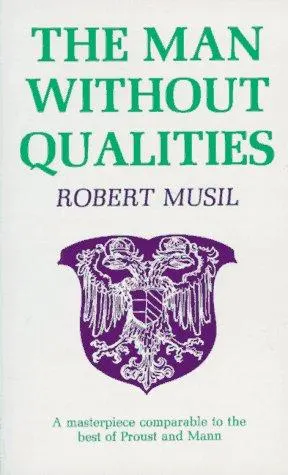
Musil offers the closest equivalent to Proust’s union of social comedy and philosophical investigation. In Vienna on the eve of the First World War, Ulrich—a gifted man unable to commit himself to any fixed identity—takes a “holiday from life” and becomes involved in a grand, vacuous patriotic campaign. Around him gathers a society whose vanity, idealism, erotic confusion, and intellectual fashionableness Musil examines with merciless precision.
Like Proust, he can pause narrative time to pursue an idea until it becomes dramatic. His characters do not merely hold opinions; they use ideas to seduce, evade, dominate, and invent themselves. The unfinished novel is one of modernism’s monumental achievements, inexhaustibly funny and intellectually intoxicating. To miss it is to miss Proust’s great rival in turning an entire civilization into an anatomy of consciousness.
Marías begins with a disturbing proposition: perhaps we should never tell anyone anything, because words survive us and can always be used again. His narrator, living in Oxford, is recruited by people interested in his unusual ability to interpret others—to infer from gestures and voices what someone may someday be capable of doing.
The three-volume novel proceeds through long, hypnotically recursive sentences in which observation becomes speculation, speculation becomes memory, and memory alters the present. A Proust reader will recognize the delicious danger of interpreting a face too closely, the way jealousy and uncertainty can make intelligence pathological, and the sense that social life is an encrypted text. Widely regarded as Marías’s central achievement, it creates an atmosphere unlike almost anything else in fiction: intimate, sinister, digressive, and impossible to shake.
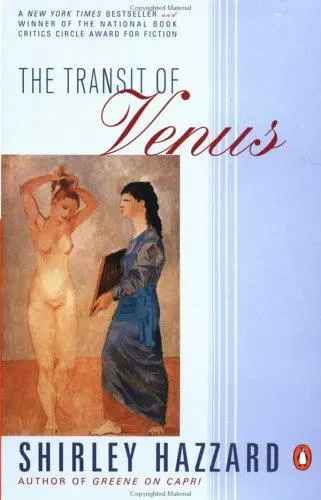
On its first page, The Transit of Venus calmly reveals two deaths; the suspense lies not in what happens but in discovering what those facts will eventually mean. From there Hazzard follows two Australian sisters entering the intricate emotional and social arrangements of postwar England, writing with a compression that makes every courtesy, omission, and misplaced word consequential.
Where Proust expands a moment until all its hidden motives appear, Hazzard plants significance so quietly that years may pass before a sentence detonates. Her prose is elegant without being ornamental, and her understanding of love includes pride, misreading, opportunism, and the stories people tell to preserve their dignity. Winner of the National Book Critics Circle Award and cherished by generations of novelists and exacting readers, this is a book whose design becomes more astonishing after the last page—and makes rereading feel inevitable.