Author
Books like Lucy Ellmann
3 books we recommend to Lucy Ellmann readers, drawn from Ducks, Newburyport — each with the reason why.
If you loved Ducks, Newburyport
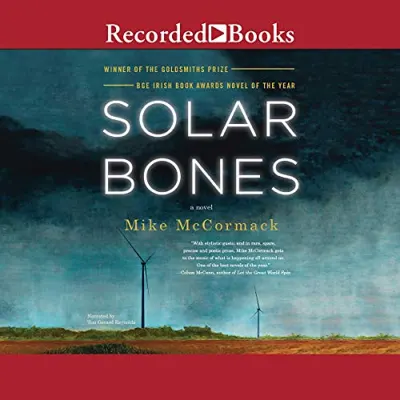
Marcus Conway sits at his kitchen table while his thoughts roam across marriage, parenthood, engineering, illness, politics and Ireland’s economic collapse. McCormack shapes that movement into one book-length sentence—not as a stunt, but as the natural form of a consciousness in which a faulty water system, a daughter’s art and a nation’s failures all bear upon one another.
Like Ellmann, he finds civic consequence inside domestic detail and lets accumulating clauses create their own emotional weather. Quieter and more austere than Ducks, Newburyport, Solar Bones has the same faith that sustained attention to an ordinary life can become monumental. Its Goldsmiths Prize and International Dublin Literary Award reflect what readers discover: a formally daring novel with an unexpectedly tender pulse.
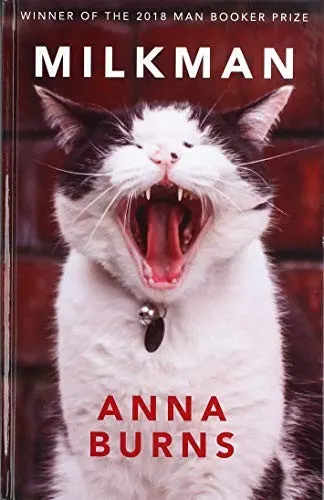
An unnamed young woman walks through an unnamed city, trying to read nineteenth-century novels while neighbours monitor her, rumours harden around her and political violence contaminates everyday speech. Her voice circles, qualifies and revises, using repetition as both comic instrument and survival mechanism.
A lover of Ellmann’s verbal momentum will recognize how syntax itself records pressure: the speaker cannot simply state what happened because every statement must pass through fear, gossip and communal judgment. Yet Milkman is fiercely funny, especially about family logic and the grotesque ingenuity of social rules. Burns’s Booker-winning novel is not merely an account of life under surveillance; it makes surveillance audible inside a mind. Once its rhythm takes hold, no conventional narration feels quite adequate.
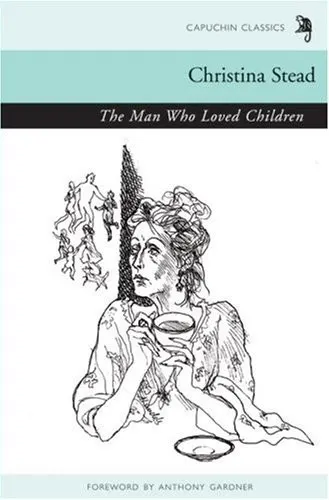
The Pollit household is a whole civilization: noisy, theatrical, financially precarious and ruled by the inexhaustible self-dramatizing of Sam Pollit and the furious despair of his wife, Henny. The children invent dialects and allegiances while the adults turn meals, debts and minor grievances into operatic campaigns.
What connects Stead to Ellmann is her refusal to sentimentalize domestic life—or to diminish it. Language breeds inside the family like a living organism, hilarious one moment and cruel the next; love, vanity, exhaustion and power are inseparable. First published in 1940 and later rescued from neglect by Randall Jarrell’s advocacy, the novel has inspired unusually intense devotion because few books render a household with such ferocity. Its comedy is enormous, its emotional danger real, and its family unforgettable.