Author
Books like Laline Paull
3 books we recommend to Laline Paull readers, drawn from The Bees — each with the reason why.
If you loved The Bees
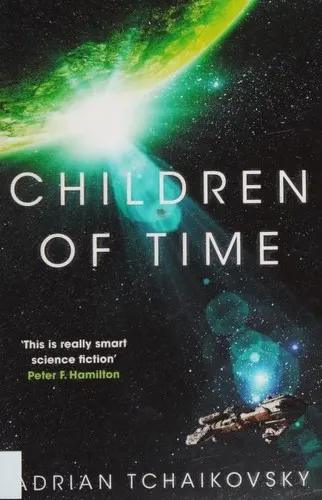
Tchaikovsky offers the same audacious pleasure of entering a nonhuman civilization and discovering that its biology shapes everything: family, technology, faith, hierarchy, and war. His spiders never feel like humans in costume; vibration, webbing, inherited knowledge, and radically different relations between the sexes generate an entire way of thinking.
The scale is enormous, but the fascination is often minute and bodily, as in The Bees: intelligence developing through physical capacities, social roles hardening into doctrine, and individuals pressing against what their society declares natural. Winner of the Arthur C. Clarke Award and now a landmark of modern evolutionary science fiction, Children of Time makes the rise of another species feel not merely plausible but magnificent. Missing it means missing one of speculative fiction’s great acts of imaginative empathy.
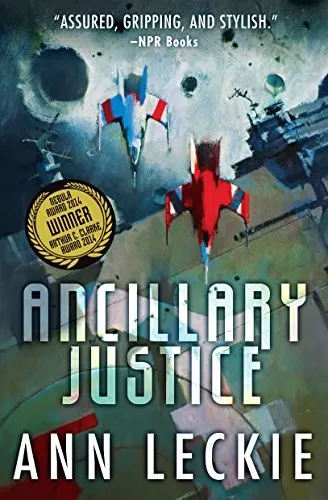
Breq once existed as a starship intelligence distributed across many human bodies; now she occupies only one. That premise gives Leckie a thrilling way to explore the tension that powers Flora 717’s story: what happens when a consciousness formed to serve a collective develops a private purpose?
Leckie makes rank, ritual, obedience, and tiny breaches of etiquette feel dangerously consequential. Breq’s cool, estranged narration also rewards the same alert reading as Paull’s prose: ordinary words gradually acquire new meanings as the architecture of the society comes into view. Ancillary Justice won the Hugo, Nebula, and Arthur C. Clarke awards—an extraordinary sweep—because its formal daring is inseparable from its emotional force. Beneath the imperial machinery is a fierce novel about loyalty, identity, and the cost of becoming singular.
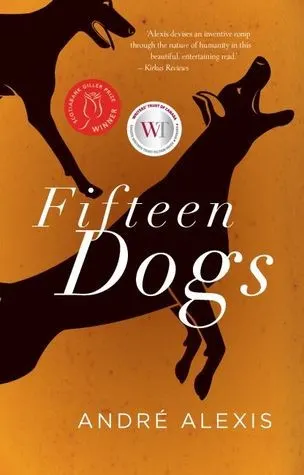
At a Toronto veterinary clinic, Apollo and Hermes wager over whether animals granted human intelligence can die happy, and fifteen dogs abruptly become self-aware. From that mischievous opening, André Alexis builds a compact, devastating novel about language, power, love, and the burdens of consciousness.
Like The Bees, it understands that a newly articulate animal society would not leave instinct behind. The dogs form loyalties and hierarchies, but intelligence complicates every scent, command, and attachment; one of them even begins making poetry shaped by canine hearing. Alexis moves between brutality, comedy, and tenderness with astonishing ease. Winner of Canada’s Giller Prize and the source of unusually passionate reader devotion, Fifteen Dogs is the rare philosophical fable whose ideas never blunt its teeth—or its capacity to break your heart.