Author
Books like Kaye Gibbons
3 books we recommend to Kaye Gibbons readers, drawn from Ellen Foster — each with the reason why.
If you loved Ellen Foster
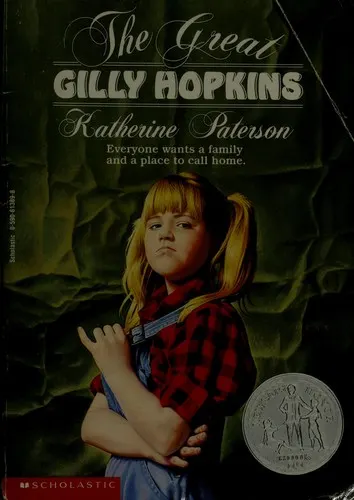
Gilly enters yet another foster home armed with contempt, schemes, and a carefully cultivated reputation for being impossible. Like Ellen, she uses quick judgment and verbal bravado to stay ahead of rejection; both girls are funny precisely because they cannot afford to be defenseless.
Paterson’s Newbery Honor novel is written for younger readers, but its emotional intelligence is ageless. It never confuses belonging with sweetness or pretends that love instantly repairs abandonment. The clash between Gilly’s performance of invulnerability and her buried longing makes this short novel astonishingly potent—and its tenderness has to fight for every inch.

For the harsher, more combustible side of Ellen Foster, read Dorothy Allison’s National Book Award finalist. Bone Boatwright grows up among poor South Carolina relatives whose pride, humor, appetite, and ferocious loyalties are rendered from within, never reduced to sociology. Her voice has Ellen’s watchfulness: she notices what adults conceal, including the dangerous ways love can become entangled with shame and dependence.
Allison writes more explicitly and with greater fury than Gibbons, but with the same insistence that a harmed child is never merely a victim. Bone’s intelligence, imagination, and complicated attachment to her family give the novel its enduring force. It is a modern classic because it makes dignity feel neither abstract nor guaranteed, but something a girl must defend sentence by sentence.
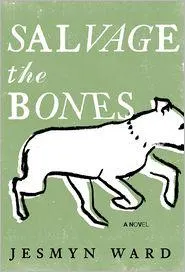
Jesmyn Ward’s National Book Award winner begins with a motherless teenage girl, Esch, watching her family prepare for a hurricane on the Mississippi Gulf Coast. Yet its real kinship with Ellen Foster lies in how scarcity sharpens perception. Esch measures love through food, labor, bodies, quarrels, and who shows up when something needs doing; Ward trusts those concrete details to reveal a family’s emotional life.
Where Gibbons is spare and sly, Ward is sensuous and mythic. Her language gives grandeur to people commonly treated as disposable without prettifying their circumstances. The siblings’ rough, imperfect devotion accumulates into something overwhelming. Missing this novel would mean missing one of contemporary fiction’s most powerful demonstrations that survival itself can be a form of love.