Author
Books like John O'Hara
3 books we recommend to John O'Hara readers, drawn from Appointment in Samarra — each with the reason why.
If you loved Appointment in Samarra

Yates brings O’Hara’s merciless clarity into a marriage. Frank and April Wheeler regard themselves as brighter and less conventional than their suburban neighbors, but Yates steadily exposes how vanity, fear, and bad faith sustain that flattering picture. Like Julian English, they are not merely trapped by society: they understand enough to become collaborators in their own confinement.
The dialogue has the same lethal social accuracy as O’Hara’s—every quarrel is also a performance, every reconciliation a revision of the record. Since its 1961 publication, the novel’s reputation has grown into something close to a consensus: few American novels diagnose self-deception so precisely. If O’Hara’s cool refusal to excuse Julian thrilled you, Yates’s equally unsparing intelligence is indispensable.
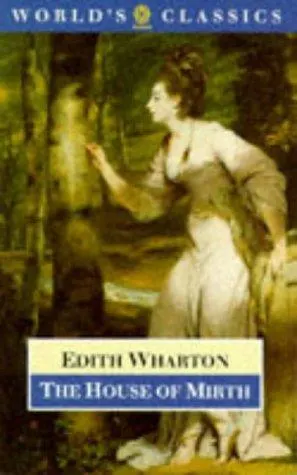
O’Hara’s Gibbsville is governed by invisible laws: everyone knows who may insult whom, which debts are forgivable, and when a social error becomes a sentence. Wharton gives those laws their definitive novel. Lily Bart is intelligent enough to read every room she enters, yet not quite willing—or able—to make the compromises her world demands.
What makes the book kin to Appointment in Samarra is its terrible fusion of agency and inevitability. Lily’s choices matter, but each choice is made inside a system that has already priced her beauty, her income, and her reputation. Wharton’s wit keeps the social observation exhilarating even as the pressure tightens. One of the great American novels of manners, it makes exclusion and gossip feel as consequential as physical violence.
For the reader haunted by Julian’s determination to keep drinking past every possible exit, Lowry offers the supreme novel of lucid alcoholic ruin. Geoffrey Firmin, a former British consul in Mexico, moves through the Day of the Dead estranged from his wife and frighteningly intimate with his own collapse. He can interpret almost everything except—or rather, including—the reasons he cannot save himself.
Lowry is more feverish and symbol-laden than O’Hara, but both novels derive their force from compression: a brief span of time becomes an entire moral life. The book’s admirers are famously devoted to it, and its stature rests not on its subject but on the intensity with which landscape, memory, comedy, and dread merge in the consul’s consciousness. Appointment in Samarra shows self-destruction from the cold clarity of the room; Under the Volcano makes you inhabit the burning mind inside it.