Author
Books like John McGahern
3 books we recommend to John McGahern readers, drawn from Amongst Women — each with the reason why.
If you loved Amongst Women
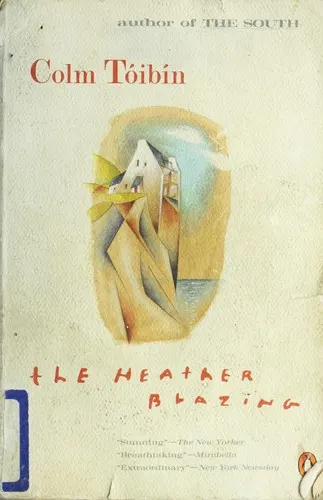
Eamon Redmond, a High Court judge, is a reserved family man whose inner life is shaped by Irish history, Catholicism, and habits of emotional concealment. Tóibín observes him with the same rare balance McGahern brings to Moran: he neither excuses a difficult patriarch nor reduces him to a monster.
The novel moves quietly between Eamon’s public authority and his private failures, showing how national history settles into temperament, marriage, and family ritual. Tóibín’s controlled, lucid prose makes tiny gestures devastating. One of his finest early novels, The Heather Blazing is perhaps the closest companion to Amongst Women—not an imitation, but another masterly portrait of a man whose love reaches his family in damaged forms.
If you admired how Amongst Women reveals a family’s emotional laws without spelling them out, Good Behaviour offers a darker, wickedly comic variation. Its narrator, Aroon St Charles, looks back on her Anglo-Irish childhood with magnificent self-assurance—and almost no understanding of what the reader can plainly see.
Keane turns manners into weapons: tact disguises cruelty, cheerfulness suppresses catastrophe, and “good behaviour” becomes a collective refusal to acknowledge pain. The comedy is savage, but the loneliness beneath it is real. Rescued from obscurity and shortlisted for the Booker Prize, this late-career triumph is now regarded as Keane’s masterpiece. Its voice is so singular, and its family so horribly plausible, that missing it would mean missing one of the great novels of repression.

At the opening, a writer hires Emerence, an elderly housekeeper who accepts employment only on her own imperious terms. From that arrangement Szabó creates an extraordinary struggle over love, privacy, service, and power. Emerence is commanding, punitive, generous, secretive, and unforgettable—the kind of character who rearranges everyone around her, as Moran does, while resisting every easy moral verdict.
Like McGahern, Szabó understands that devotion can contain coercion and that intimacy may deepen rather than solve guilt. The narrator recounts the relationship with painful hindsight, so every domestic detail seems charged with an approaching reckoning. Widely considered Szabó’s masterpiece, The Door has inspired intense devotion far beyond Hungary; in Len Rix’s translation, its moral force is immediate and inescapable.