Author
Books like John Cleland
3 books we recommend to John Cleland readers, drawn from Fanny Hill — each with the reason why.
If you loved Fanny Hill
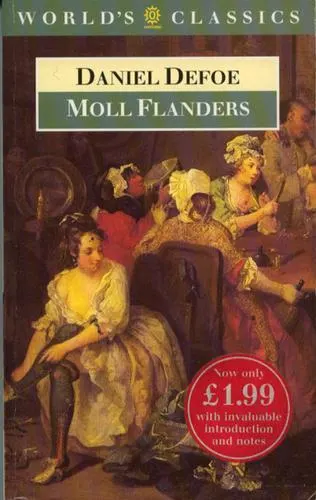
Moll has Fanny’s great gift for telling a supposedly cautionary life story while making the life itself sound irresistible. Orphaned and resourceful, she enters a world where sex, marriage, money, and survival are inseparable; her pious retrospective language repeatedly collides with the relish and ingenuity of her memories.
Defoe is less sensuous than Cleland but even sharper about self-invention. Moll calculates, improvises, deceives, and narrates with such persuasive vitality that judgment keeps giving way to admiration. This foundational English picaresque offers one of literature’s most compelling female voices—and reveals the narrative machinery Cleland would make still more erotic.
Published in 1748, the same year as the first part of Fanny Hill, this notorious French clandestine novel treats arousal as an intellectual awakening. Thérèse’s education unfolds through overheard encounters and conversations about religion, nature, freedom, and pleasure; erotic curiosity becomes a way of dismantling clerical hypocrisy and inherited superstition.
Where Cleland delights in extravagant euphemism, Thérèse joins explicitness to materialist argument. The combination made it one of eighteenth-century France’s most widely circulated forbidden books. Reading it feels like discovering Fanny Hill’s more philosophical, more subversively argumentative cousin—a work that shows why erotic fiction once frightened authorities as much for its ideas as for its bodies.
Isadora Wing’s voice has the quality that matters most in Fanny’s: appetite transformed into comic prose. On a trip to Vienna with her husband, she begins scrutinizing marriage, fantasy, psychoanalysis, literary ambition, and the gap between the freedom women imagine and the lives they actually permit themselves.
Jong’s 1973 novel became a cultural phenomenon because its sexual candor came fused with intelligence, embarrassment, satire, and self-mockery. Isadora is neither an emblem of liberation nor an object lesson; she is contradictory, articulate, desirous, and very funny. The book’s influence can obscure how alive it remains as a novel. Anyone delighted by Fanny’s refusal to let shame control the story should experience Jong’s equally audacious reclamation of who gets to speak desire aloud.