Author
Books like Ismail Kadare
3 books we recommend to Ismail Kadare readers, drawn from The Palace of Dreams — each with the reason why.
If you loved The Palace of Dreams

A series of numbered workplace testimonies records how a spacecraft’s human and humanoid crew react to mysterious objects brought aboard. Desire, memory, and identity enter the record only through an employer’s interrogations.
Like The Palace of Dreams, this brief novel makes administration uncanny: the institution’s neutral language cannot conceal its appetite for possessing what is most private. Ravn’s fragmentary form also turns the reader into an uneasy interpreter, searching contradictory statements for a truth the bureaucracy may already have distorted. Shortlisted for the International Booker Prize, The Employees is austere, sensuous, and haunting—one of the rare dystopias that feels genuinely alien rather than merely topical.
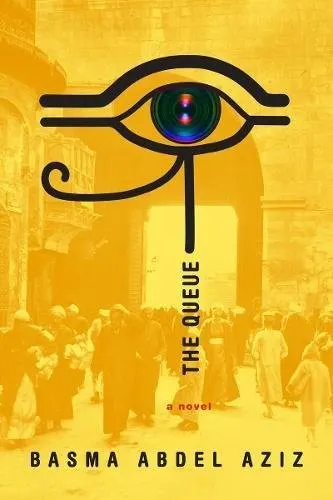
An enormous line forms outside the Gate, the source of every permit and official decision, although the Gate never opens. Citizens wait, improvise, gossip, and slowly reorganize their lives around an authority whose power grows through delay.
Abdel Aziz understands, as Kadare does, that tyranny is both terrifying and ridiculous. Forms contradict bodies; official accounts overwrite witnessed events; submission arrives not in one dramatic blow but through hundreds of petty requirements. Yet the queue remains crowded with sharply observed, stubbornly human characters, giving the satire warmth as well as menace. The result is a compact modern classic of bureaucratic absurdity whose final chill comes from how little exaggeration it seems to require.
A disaffected clerk impulsively kills a high official, and the state responds by constructing a vast conspiracy. From that opening, Serge follows the investigation through offices, prisons, party hierarchies, and distant provinces, revealing a regime in which innocence is irrelevant because the machinery requires usable guilt.
Where Kadare compresses totalitarian logic into one sinister ministry, Serge unfolds its entire ecosystem. His great achievement is moral breadth: functionaries, idealists, opportunists, and condemned prisoners never become mere pieces in an allegory, even as the system forces them into assigned roles. Often regarded as Serge’s masterpiece, the novel combines the momentum of a political thriller with the tragic authority of a writer who had personally endured revolutionary repression. It is one of the indispensable fictional anatomies of terror.