Author
Books like Han Shaogong
3 books we recommend to Han Shaogong readers, drawn from A Dictionary of Maqiao — each with the reason why.
If you loved A Dictionary of Maqiao
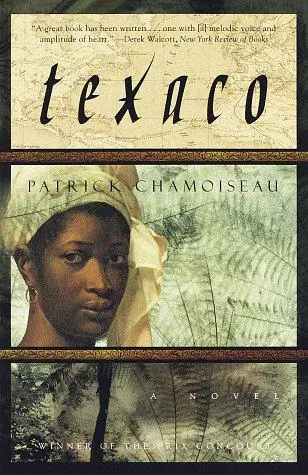
An urban planner arrives at Texaco, a Martinican shantytown, intending to assess it for demolition; the settlement’s history answers him through the voice of Marie-Sophie Laborieux. Her testimony turns place-names, family stories, Creole expressions, and bureaucratic records into rival claims on reality.
As in Maqiao, language here is social memory and a weapon against centralized authority. Chamoiseau makes the collision between Creole speech and official French feel inseparable from the struggle over who is entitled to describe—and therefore control—a community. Yet Texaco has its own tremendous energy: incantatory, bawdy, crowded with voices, and alive to the absurdity inside historical catastrophe. Winner of the Prix Goncourt and a major work of Caribbean literature, it is the rare novel whose linguistic inventiveness carries the force of an entire people refusing erasure.
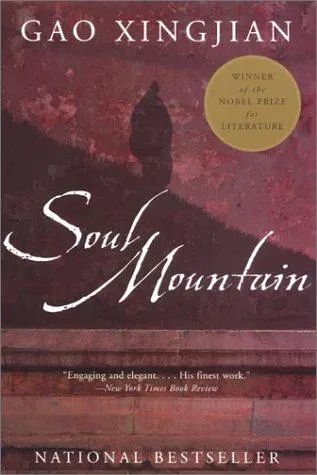
After a frightening misdiagnosis, a traveler leaves China’s political and cultural centers for remote forests, villages, and river country. His journey gathers folk songs, local rites, half-remembered legends, conversations, and landscapes—but Gao continually unsettles the observer’s authority by shifting among “I,” “you,” “he,” and “she.”
That makes Soul Mountain a powerful companion to Maqiao: both novels treasure vernacular knowledge while questioning the educated outsider who collects it. Neither offers village life as a quaint storehouse of authenticity. Memory mutates, stories contradict one another, and the self doing the recording proves no more stable than the culture recorded. Gao’s audacious, hypnotic masterwork was central to the reputation that brought him the Nobel Prize; missing it means missing one of the boldest attempts to make a novel hold folklore, history, desire, and doubt without reducing any of them.
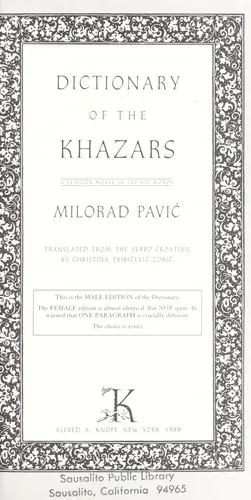
Pavić’s “lexicon novel” presents the vanished Khazar people through three incompatible books—Christian, Islamic, and Hebrew—whose entries overlap, dispute one another, and transform fact into dream. You can follow names across the volumes or read straight through; either way, certainty keeps dissolving beneath you.
The kinship with Maqiao goes deeper than alphabetical form. Both books expose dictionaries as arguments disguised as reference works: whoever defines a word also arranges history, belief, and power. But where Han is earthy and anthropological, Pavić is baroque, riddling, and fantastical, filling his pages with dream hunters, poisoned books, and identities that migrate across centuries. Since its 1984 publication it has become a landmark of nonlinear fiction, inspiring unusually devoted readers because it does not merely tell a story—it makes reading itself an act of reconstruction.