Author
Books like Giorgio De Maria
3 books we recommend to Giorgio De Maria readers, drawn from The Twenty Days of Turin — each with the reason why.
If you loved The Twenty Days of Turin
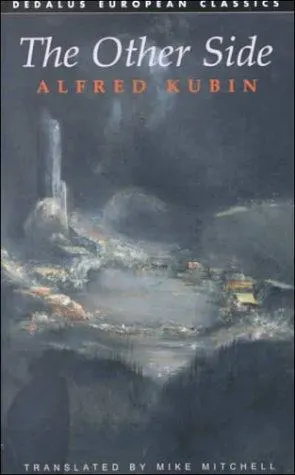
Kubin’s 1909 Expressionist cult classic concerns a secluded city-state that initially seems merely eccentric, then grows malign in ways no rational account can contain. Like De Maria, Kubin treats architecture, rumor, bureaucracy, and public behavior as parts of one diseased organism: the supernatural is frightening because it feels inseparable from ordinary civic life.
Kubin was also a major illustrator, and his prose has the stark, hallucinatory force of his drawings. Often regarded as a precursor to Kafka, this is one of the foundational novels of the modern nightmare-city—and reading it reveals a deep ancestral current beneath The Twenty Days of Turin.
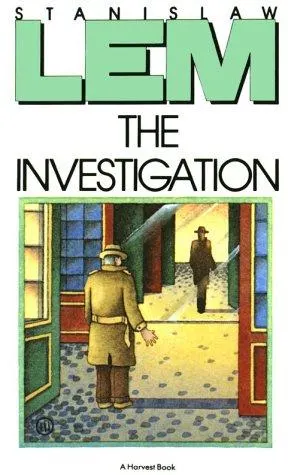
A Scotland Yard detective investigates a baffling series of incidents involving corpses, armed with reports, statistics, hypotheses, and institutional expertise. Each attempt at explanation produces more possibilities rather than greater certainty.
What will grip a De Maria reader is Lem’s collision of procedural sobriety with metaphysical terror. Both novels adopt the voice of inquiry—measured, documentary, almost bureaucratic—only to expose reason’s helplessness before events that may be supernatural, systemic, or simply beyond interpretation. From the author of Solaris, this compact, unnervingly unresolved novel is among Lem’s purest demonstrations that information can intensify dread instead of dispelling it.
Years after an occult experiment, three friends remain bound by something they cannot properly describe and cannot escape. Harrison cares less about magical spectacle than about the damage left in its wake: evasive memories, ruined intimacy, invented consolations, and the suspicion that private catastrophe has wider moral dimensions.
That makes it an unusually close spiritual companion to De Maria. Both writers understand horror as an aftermath sustained by silence; both withhold just enough to make every mundane detail feel contaminated. Harrison’s novel has become a touchstone of British literary weird fiction, cherished for prose that is beautiful without softening its cruelty. Its sadness, ambiguity, and sense of irreversible trespass linger for years.