Author
Books like Gillian Flynn
6 books we recommend to Gillian Flynn readers, drawn from Gone Girl and Sharp Objects — each with the reason why.
If you loved Gone Girl
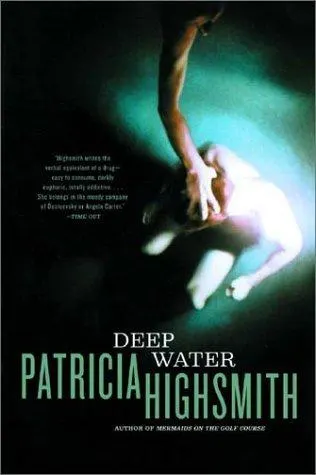
Highsmith’s marriage is not merely unhappy; it is a private ecosystem of humiliation, performance, and control. Vic tolerates his wife Melinda’s lovers while cultivating the image of a mild, civilized husband—but beneath that composure lies something much colder.
Like Flynn, Highsmith understands that cruelty can be most effective when practiced through manners, and that a marriage may survive because conflict is the bond holding it together. Her cool, exact prose makes every social encounter feel faintly poisonous. Highsmith’s reputation as a master of psychological suspense rests on novels like this one: Deep Water is lean, nasty, and frighteningly perceptive about the stories couples tell the world—and themselves.

Barbara Covett begins recording the downfall of a fellow teacher with the officious confidence of someone who believes she alone sees clearly. Her voice is witty, wounded, observant—and so possessive that every sentence quietly implicates its author.
Readers who loved Amy’s verbal brilliance and Flynn’s merciless eye for self-dramatization will relish Heller’s narrator. The suspense comes not from asking whether Barbara is reliable, but from discovering the shape of her unreliability and the hunger beneath her judgments. Shortlisted for the Booker Prize, Notes on a Scandal is both a gripping psychological novel and a miniature masterpiece of poisonous narration. Few books make loneliness this funny, shameful, and dangerous.
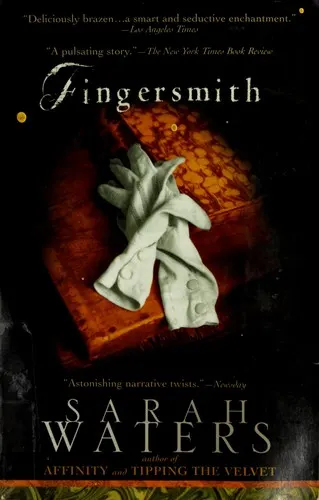
Sue Trinder, raised among thieves, is recruited into an elaborate scheme involving a wealthy young woman and her inheritance. That is merely the door through which Waters invites you; once inside, certainty becomes increasingly difficult to hold onto.
Fingersmith shares Gone Girl’s most addictive formal pleasure: the moment a story pivots and everything already read acquires a new charge. Yet its ingenuity never reduces its characters to puzzle pieces. Waters writes with sensual detail, emotional ferocity, and a sharp understanding of how money, gender, and storytelling determine whose version of reality prevails. Booker-shortlisted and adored for its audacity, it is the rare intricately engineered novel whose revelations deepen the human stakes rather than replacing them.
If you loved Sharp Objects
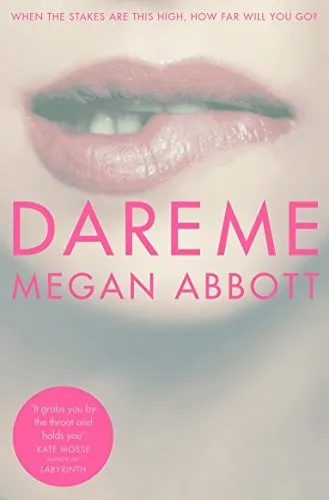
Abbott understands, as Flynn does, that female intimacy can be both sanctuary and blood sport. Her high-school cheerleaders are disciplined athletes whose loyalties, appetites, and rivalries become dangerously entangled when a magnetic new coach takes charge.
The kinship lies in the precision: bodies are instruments of power, cruelty passes for affection, and every clipped sentence carries menace. Abbott—an Edgar-winning master of literary noir—turns teenage friendship into something as intricate and ruthless as organized crime. If Camille’s caustic intelligence and self-destructive hunger fascinated you, Dare Me is essential.
Few novels portray a mother’s influence as beautifully or poisonously as White Oleander. After her imperious, charismatic mother is imprisoned, Astrid moves through a succession of foster homes, trying to discover which parts of her identity genuinely belong to her.
Like Sharp Objects, it understands that maternal damage can become an inner voice: seductive, judgmental, almost impossible to silence. Fitch’s lush prose makes Southern California shimmer while never softening Astrid’s ordeal. An Oprah’s Book Club selection that has retained a fiercely devoted readership, it is the expansive, lyrical mother-daughter nightmare that Flynn’s novel leaves you craving.
The opening gives you an eight-year-old girl who has killed a child—and then asks you to remain inside her consciousness. Decades later, she is a struggling mother living under another name, terrified that the past and her own capacity for harm will overtake her.
Tucker achieves the difficult balance that makes Sharp Objects so powerful: she neither excuses a damaged protagonist nor reduces her to a monster. Childhood deprivation, shame, violence, and motherhood are rendered with unnerving psychological clarity. The suspense matters, but the real compulsion is more intimate: the frightening hope that someone formed by cruelty might still become something else.