Author
Books like George Saunders
3 books we recommend to George Saunders readers, drawn from Lincoln in the Bardo — each with the reason why.
If you loved Lincoln in the Bardo
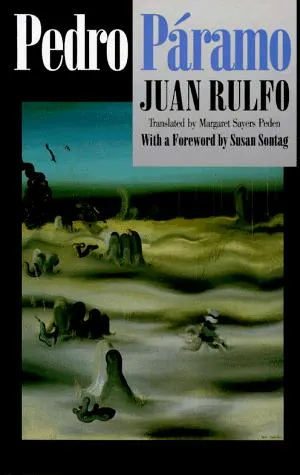
A man enters the Mexican town of Comala searching for his father and finds voices everywhere—whispering through rooms, memories and the earth itself. Rulfo dissolves the border between living and dead so quietly that disorientation becomes enchantment.
Like Saunders, he makes a chorus out of loneliness: fragment by fragment, private suffering gathers into a community’s reckoning. Yet this immensely influential novel is only about 130 pages, stripped to an eerie, elemental intensity. García Márquez revered it, and its influence runs throughout Latin American fiction. To miss it is to miss one of the clearest ancestors of the spell Saunders casts.
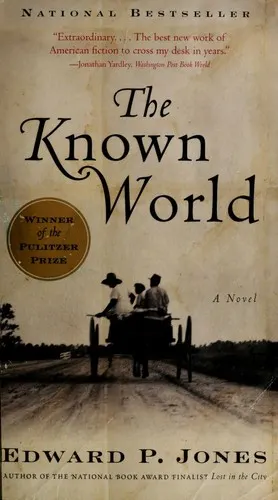
Edward P. Jones begins with the death of Henry Townsend, a formerly enslaved man who became an enslaver, then lets his narration roam freely across the people implicated in that contradiction. A minor figure may suddenly receive a whole future; a bureaucratic record may open onto a life the record cannot contain.
That extraordinary freedom with time resembles Saunders’s historical collage, but Jones uses a serene omniscience rather than theatrical voices. The effect is equally powerful: history stops being background and becomes a multitude of irreducible human beings, compromised, ridiculous and deserving of attention. Its Pulitzer was recognition of a genuine masterpiece—morally intricate, formally subtle and inexhaustibly alive.
Egan’s Pulitzer-winning novel keeps changing shape—shifting narrators, periods, styles and even, famously, into a chapter composed as PowerPoint slides. The virtuosity never feels like display for its own sake. Each formal turn discovers a new way to show how people misremember one another, squander time and remain mysteriously connected.
A reader who loved the comic cacophony of Lincoln in the Bardo will recognize the exhilaration of assembling a larger emotional story from partial voices. Egan is sharper and more contemporary, steeped in music and damaged ambition, but she shares Saunders’s rare ability to pivot from absurdity to tenderness in a sentence. Its experiments are ingenious; what makes readers devoted to it is the ache concealed inside them.