Author
Books like Freida McFadden
3 books we recommend to Freida McFadden readers, drawn from The Housemaid — each with the reason why.
If you loved The Housemaid

A wealthy Chicago couple appear to have an enviable marriage; then a woman connected to the husband is found dead. From there, Ellis constructs an exceptionally intricate game of competing stories, concealed motives, and clues whose significance keeps changing.
Like The Housemaid, it invites quick judgments and then weaponizes them against you. The multiple narrators are not merely unreliable—they are strategically truthful, revealing just enough to let you build the wrong picture yourself. Thriller devotees have embraced it as an under-the-radar favorite for good reason: its final stretch delivers the rare sequence of twists that feel outrageous in the moment and inevitable afterward.
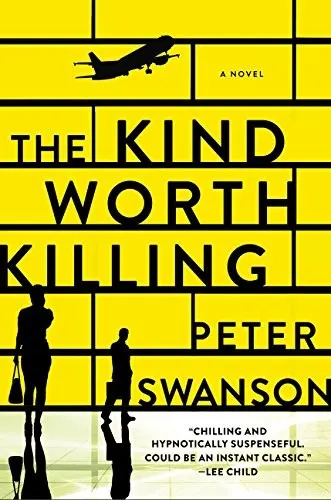
On a flight from London to Boston, two strangers begin discussing murder. Swanson turns that provocative encounter into a coolly controlled psychological thriller populated by intelligent people with flexible consciences.
Where The Housemaid finds dark pleasure in shifting power between predator and prey, this novel makes that contest even more morally treacherous. Each change of perspective alters whom you fear, whom you trust, and—most disturbingly—whom you want to succeed. A finalist for the CWA Ian Fleming Steel Dagger, it has become a modern favorite among readers who like their suspense elegant, nasty, and impossible to put down.

Amber Patterson is tired of being invisible. She selects glamorous, wealthy Daphne Parrish as the doorway into the privileged life she believes she deserves, then carefully makes herself indispensable.
The kinship with The Housemaid lies not just in the affluent household or scheming outsider, but in the novel’s command of envy and assumption. Constantine lets you feel the allure of money, beauty, and status while steadily exposing the violence hidden inside supposedly perfect lives. A bestselling Reese’s Book Club selection, it earned its huge readership through a particularly satisfying reversal of perspective: skip it, and you miss one of domestic suspense’s most compulsively readable traps.