Author
Books like Frank Schätzing
3 books we recommend to Frank Schätzing readers, drawn from The Swarm — each with the reason why.
If you loved The Swarm
On a remote Vietnamese archipelago, evidence emerges that octopuses may possess language, culture, and intentions of their own. Nayler shares Schätzing’s gift for making marine science intellectually thrilling, but the deeper kinship lies in the moral vertigo: what if humanity’s supposed dominion rests on its inability—or refusal—to recognize another intelligence?
Winner of the Locus Award for Best First Novel, this is a tauter, more philosophical book than The Swarm, alive to corporate exploitation, artificial consciousness, and the difficulty of communicating across radically different forms of life. Its cephalopods are not merely ingenious monsters or symbols; they alter the terms of the human world. Few recent first-contact novels make wonder, dread, and ethical urgency reinforce one another so powerfully.
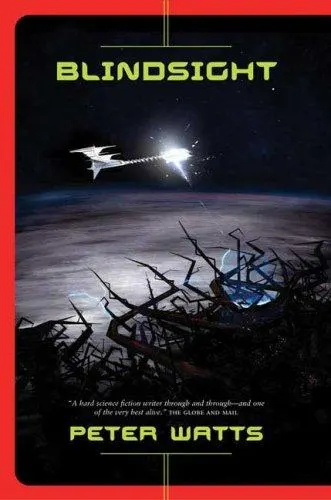
If The Swarm’s greatest pleasure was watching scientists struggle to understand an intelligence that does not think like us, Blindsight pushes that challenge to its terrifying limit. After an inexplicable event envelops Earth, a spacecraft carries an unusually assembled team toward the source—and every familiar assumption about consciousness, evolution, and intelligence begins to look dangerously provincial.
Watts, a marine biologist, writes hard science fiction with predatory intensity. The technical ideas are not decoration: they drive the suspense and steadily undermine the reader’s confidence in what being intelligent even means. A Hugo finalist that has acquired an exceptionally devoted cult readership, Blindsight is the rare novel whose central argument can continue troubling you years after its plot has faded.
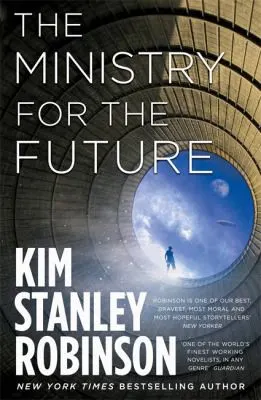
Robinson matches Schätzing not through oceans or hidden adversaries, but through scale. Beginning with a catastrophic heatwave, the novel asks how a planetary emergency might actually be confronted—through science, finance, law, politics, engineering, activism, and morally compromised action rather than a single miraculous solution.
Its rotating viewpoints and documentary interludes create the same exhilarating sense that an immense system is coming into focus. Robinson makes central banks, carbon policy, and geoengineering feel consequential because he reveals the lives and power struggles inside them. Widely regarded as a landmark climate novel, The Ministry for the Future offers something rare after the terror: a painstakingly argued vision of how humanity might become capable of responding.