Author
Books like Edward Anderson
3 books we recommend to Edward Anderson readers, drawn from Thieves Like Us — each with the reason why.
If you loved Thieves Like Us

Few novels come closer to Anderson’s fusion of outlaw fatalism and bruised romance. An escaped prisoner meets Virginia in a cheap hotel, and Chaze makes their wary attraction feel both transactional and achingly sincere. Like Bowie and Keechie, they imagine money and motion might buy a life beyond society’s reach.
Chaze’s prose is the revelation: hard-boiled one moment, startlingly lyrical the next, alive to gasoline, motel rooms, silence, and mistrust. Long neglected before being reclaimed as a noir classic, this is the rare cult novel that fully deserves its resurrection.
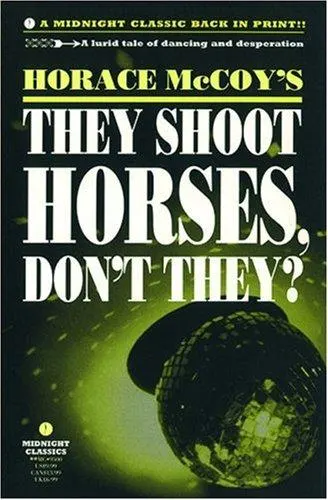
McCoy finds the same cruelty Anderson sees in Depression America, but concentrates it inside a dance marathon, where exhausted contestants turn their bodies into public entertainment for the chance of a few dollars. The setting differs; the moral economy does not. Poverty narrows every choice until exploitation can masquerade as opportunity.
The novel is savagely compressed, unsentimental, and compassionate toward people whom respectable society treats as disposable. Published only two years before Thieves Like Us, it remains one of the period’s most devastating indictments of the American promise. Its short length makes its force almost shocking.

Where Anderson asks whether fugitives can ever truly escape prison, Bunker asks whether release itself can become another kind of sentence. Max Dembo emerges on parole into curfews, degrading work, bureaucratic suspicion, and a world whose legitimate doors seem designed to close in his face.
Bunker had spent years in prison, and his authority appears not as documentary display but in the novel’s exact knowledge of criminal loyalties, calculations, and humiliations. The prose is tougher and more abrasive than Anderson’s, yet it shares his refusal to reduce lawbreakers to monsters. A landmark of American crime fiction, later filmed as Straight Time, it makes criminality feel less like an exotic underworld than a social trap being patiently reset.