Author
Books like David Diop
3 books we recommend to David Diop readers, drawn from At Night All Blood Is Black — each with the reason why.
If you loved At Night All Blood Is Black
Birahima, a child soldier crossing Liberia and Sierra Leone, narrates with the help of four dictionaries, defining words even as war destroys their ordinary meanings. His voice is profane, funny, boastful, wounded, and horrifyingly matter-of-fact—the book’s great achievement is to make linguistic exuberance carry unbearable experience.
Like Diop, Kourouma refuses the decorum expected of war stories. Innocence and brutality occupy the same sentence, while imported languages and political categories prove grotesquely inadequate to African realities. Awarded both the Prix Renaudot and the Goncourt des Lycéens, this is not merely another child-soldier novel: it is a ferocious reinvention of how war can be narrated.

A young Sudanese man returns from Europe to his village and becomes fascinated by the enigmatic Mustafa Sa’eed. From that encounter, Salih constructs a compact, increasingly fevered study of storytelling, sexual power, colonial education, and the dangerous myths men create about themselves.
Readers who admired the way Alpha Ndiaye’s narration both reveals and conceals his psychic collapse will recognize Salih’s mastery of unstable confession. The narrator listens, judges, identifies, and gradually loses his secure distance; identities begin to echo one another as seductively as Diop’s repeated phrases. A cornerstone of modern Arabic fiction, this short novel has the density and afterlife of myth: once entered, its moral undertow is difficult to escape.
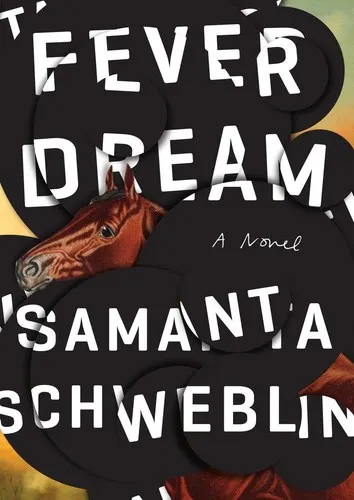
A dying woman lies in conversation with a boy who keeps insisting that she identify the exact moment when everything went wrong. Their clipped exchange circles through memory, correcting itself, discarding distractions, and tightening around an unnamed catastrophe. Schweblin makes the dialogue feel at once like an interrogation, a confession, and a nightmare trying to understand itself.
The kinship with Diop lies in that ruthless compression: a repeated phrase becomes an instrument of dread, bodily danger becomes inseparable from moral responsibility, and the reader is trapped inside a consciousness whose logic grows stranger while remaining emotionally exact. Shortlisted for the Man Booker International Prize, Fever Dream is one of those rare brief novels whose tension survives rereading—because knowing what happens does not diminish the terror of how it is told.