Author
Books like Cyril Hare
3 books we recommend to Cyril Hare readers, drawn from Tragedy at Law — each with the reason why.
If you loved Tragedy at Law
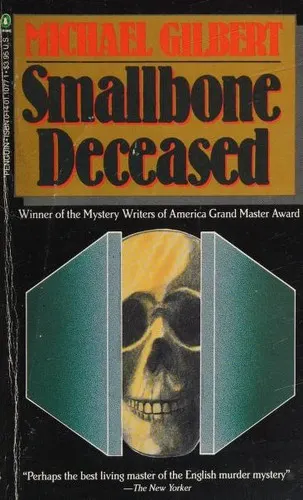
When a body is discovered in a deed box at a venerable London solicitors’ firm, Michael Gilbert turns office hierarchy, professional etiquette and legal routine into the machinery of detection. Like Hare, he knew the law firsthand, and his authority appears not as exposition but in perfectly chosen details: the geography of chambers, the custody of documents, the gradations of status among clerks and partners.
Gilbert’s humour is cooler and more compressed than Hare’s, but the same civilized intelligence is at work. Every eccentricity can be comic, revealing or incriminating—sometimes all three. Long regarded as a classic of postwar British detection, Smallbone Deceased offers the rare satisfaction of a fair puzzle inseparable from a brilliantly rendered professional community.
A wealthy man is found dead in a village stocks, but Heyer’s real masterstroke is the victim’s spectacularly indiscreet family. His siblings greet suspicion with jokes, quarrels and alarming candour, while Inspector Hannasyde attempts to impose method on their comic disorder.
Anyone who enjoyed Hare’s ability to make pomposity and bad manners both entertaining and consequential will relish this. Heyer’s dialogue has the speed and precision that made generations of readers devoted to her, yet the comedy never trivializes the mystery: personality itself becomes evidence. Death in the Stocks is not merely amusing between clues; its wit is part of its design.
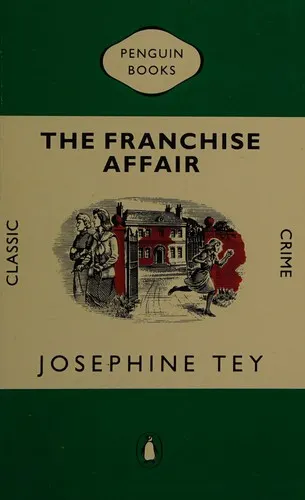
Robert Blair, a solicitor accustomed to placid provincial business, is asked to help two women accused by a schoolgirl of abduction and assault. Tey shifts the emphasis from courtroom pyrotechnics to the harder questions surrounding law: whom people instinctively believe, how reputation becomes a verdict, and what a respectable professional owes an unpopular client.
The kinship with Tragedy at Law lies in its humane legal intelligence and distrust of easy appearances. Tey makes interviews, newspaper pressure and small-town observation steadily gripping, while Blair’s reluctant involvement gives the novel a wonderfully understated emotional pull. One of Tey’s most admired books, it is both an elegant investigation and a disturbing study of judgment before trial.