Author
Books like Bohumil Hrabal
3 books we recommend to Bohumil Hrabal readers, drawn from I Served the King of England — each with the reason why.
If you loved I Served the King of England
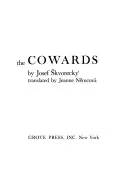
Danny Smiricky spends the last days of the Second World War thinking less about heroism than about jazz, girls, and how he appears to everyone else. Like Ditie, he is vain, observant, evasive, and enormously enjoyable company; the comedy comes from the gulf between his preferred self-image and what his own narration reveals.
The novel caused a scandal when it appeared in communist Czechoslovakia in 1958: Škvorecký had replaced officially approved heroism with muddle, opportunism, erotic distraction, and accidental courage. Its irreverence now looks foundational. Anyone who loved Hrabal’s ability to make vanity both ridiculous and painfully human should not miss this landmark of Czech fiction.
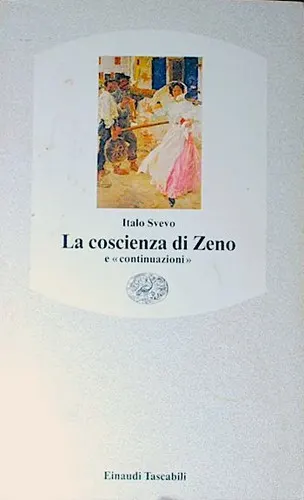
Zeno Cosini begins writing his confessions for a psychoanalyst, then turns the exercise into an inexhaustible defense of his smoking, romantic duplicity, business failures, and general incapacity to change. His explanations are so ingenious that every attempt at honesty becomes a fresh act of self-deception.
That is the deep kinship with Hrabal: a narrator can be charming without being trustworthy, foolish without being innocent, and morally revealing precisely when he means to conceal himself. Initially neglected and later championed by James Joyce, Svevo’s novel became a modernist classic because Zeno’s comic rationalizations feel inexhaustibly alive. Ditie’s admirers may recognize an Italian cousin—and one of literature’s supreme talkers.
A Soviet soldier of spectacularly modest abilities is ordered to guard a grounded military airplane beside a remote village. Bureaucracy effectively forgets him there, but Chonkin’s literal-minded obedience continues—and becomes the fixed point around which official paranoia spins ever more elaborate nonsense.
Voinovich’s comedy has Hrabal’s appetite for earthy detail, anecdotal escalation, and the little man whose passivity exposes the gigantic fraudulence of power. Yet Chonkin is not simply a clown: his decency makes the surrounding machinery look both more absurd and more frightening. Circulated outside the Soviet Union and inseparable from Voinovich’s reputation as a dissident satirist, the novel earns its laughter by showing how sanity can survive in an insane system almost by accident.