Author
Books like Benjamin Alire Sáenz
3 books we recommend to Benjamin Alire Sáenz readers, drawn from Aristotle and Dante Discover the Secrets of the Universe — each with the reason why.
If you loved Aristotle and Dante Discover the Secrets of the Universe
Darius Kellner feels inadequate everywhere: too Persian in America, too American when visiting Iran, and never quite the son he imagines his father wants. Then he meets Sohrab, whose friendship makes room for honesty without demanding that Darius become someone else first.
The central bond here is friendship rather than romance, but it has the intimate force readers cherish in Aristotle and Dante. Khorram writes beautifully about depression, fathers and sons, cultural estrangement, and the radical relief of being understood by another boy. A William C. Morris Award finalist, this is one of YA’s most beloved portraits of vulnerable masculinity—and Darius’s tentative hope is impossible not to root for.
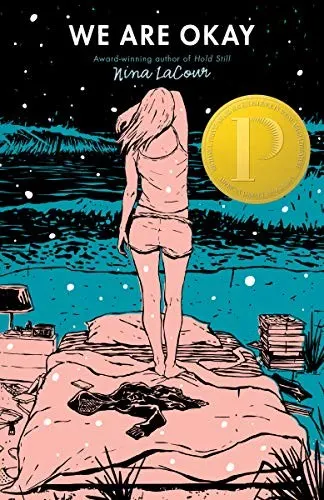
Marin is alone in a nearly deserted college dorm, waiting for her former best friend Mabel to arrive. She has fled her old life without explaining why, and the winter quiet around her feels like an extension of everything she cannot say.
Nina LaCour’s Michael L. Printz Award winner is even more distilled than Sáenz’s novel: spare, wintry, and exquisitely attentive to pauses, gestures, and evasions. Like Ari, Marin has mistaken silence for self-protection; like Dante, Mabel understands that loving someone sometimes means waiting at the edge of that silence. Few novels make loneliness feel so physically present—or portray the first fragile return to connection with such grace.
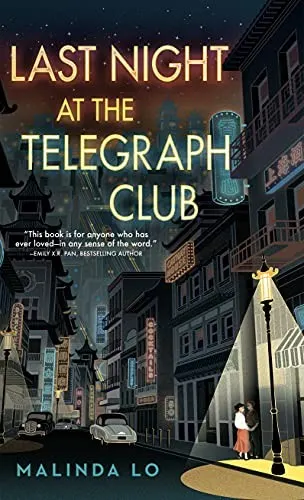
In 1950s San Francisco, seventeen-year-old Lily Hu discovers an advertisement for a male impersonator performing at the Telegraph Club. The image awakens a recognition she can barely name, and a classmate, Kath, offers the exhilarating possibility that she may not have to face it alone.
What links Malinda Lo’s novel to Aristotle and Dante is the precision with which it captures desire before certainty: the charged glance, the dangerous question, the moment another person makes a previously unimaginable life seem real. Lily’s awakening unfolds amid family loyalty, racism, and political suspicion, so every step toward herself matters. Winner of the National Book Award for Young People’s Literature, it has become a landmark of queer historical fiction because its love story is not merely romantic—it is an argument for the life-changing power of recognition.