Author
Books like Aldous Huxley
3 books we recommend to Aldous Huxley readers, drawn from Brave New World — each with the reason why.
If you loved Brave New World
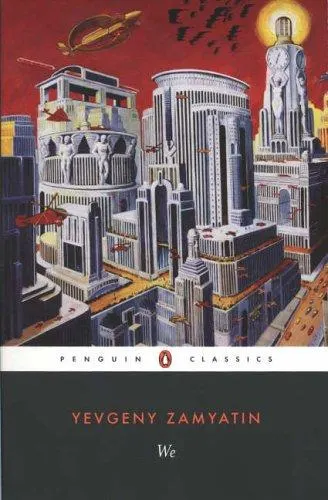
Before Huxley’s World State, Zamyatin imagined the glass-walled OneState, where citizens have numbers instead of names and daily life runs according to mathematically perfect schedules. D-503, an engineer devoted to this rational paradise, begins a diary celebrating its perfection—only for an encounter with the enigmatic I-330 to introduce impulses he cannot reduce to an equation.
We is a foundational dystopian novel, but its kinship with Brave New World runs deeper than influence or genre. Both ask why people might enthusiastically surrender freedom: not merely from fear, but from a desire to escape uncertainty, privacy, and painful individuality. Zamyatin’s feverish, fractured prose makes awakening feel like both illness and ecstasy. If Huxley made you wonder whether stability can become a form of spiritual annihilation, We is indispensable.
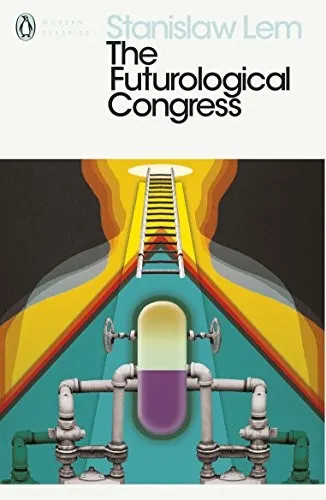
For the reader who loved Huxley’s audacity and comic intelligence, Lem offers a delirious escalation. Futurist Ijon Tichy attends a conference in an overcrowded luxury hotel while civilization outside is coming apart; authorities respond with an arsenal of psychoactive chemicals, and reality soon becomes alarmingly difficult to verify.
Lem’s compact cult classic turns pharmacology, consumer abundance, bureaucratic euphemism, and manufactured contentment into a cascade of savage jokes. Like Huxley, he understands that the most effective oppression may alter desire and perception rather than simply punish dissent. Yet the novel never settles into a lecture: its linguistic inventions and escalating absurdities make it exhilaratingly unpredictable. Few books match Brave New World’s fusion of intellectual seriousness and wicked fun so closely.
Kathy H. introduces herself as a ‘carer’ and looks back on her childhood at Hailsham, an isolated English boarding school whose kindly routines conceal unsettling assumptions. Ishiguro lets those assumptions emerge through remembered friendships, jealousies, artwork, and half-understood conversations rather than through overt exposition.
This Booker-shortlisted novel shares Huxley’s deepest concern: how thoroughly people can be conditioned to accept the role society has designed for them. But where Huxley uses satire and argumentative brilliance, Ishiguro uses restraint, tenderness, and devastating omissions. The calmness of Kathy’s voice becomes its own evidence of what institutions can do to the imagination. Never Let Me Go is now widely regarded as one of Ishiguro’s defining novels because its moral horror is inseparable from its intimate portrait of love and memory; it is the haunting emotional counterpart to Huxley’s colder nightmare.