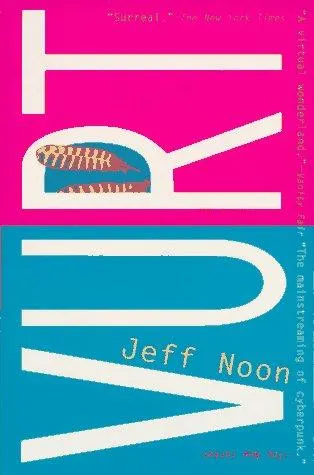
Books like Vurt
Vurt lingers because its ecstatic weirdness is never merely decorative: beneath the feathers, slang and dream-tech beats a bruising story about desire, loss and the dangerous wish to escape yourself. These three novels possess that same fusion of formal daring, subcultural energy and emotional consequence.
If you liked Vurt, you’ll love these
Not lookalikes — kindred books. Each one shares something essential with Vurt, and we tell you exactly what.
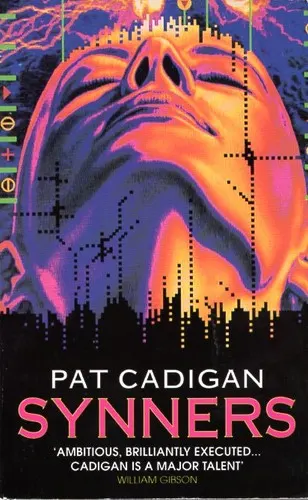
Cadigan’s Arthur C. Clarke Award winner is cyberpunk at its most sensuous and human. Her hackers, musicians and visual artists inhabit a world where entertainment technology is becoming indistinguishable from consciousness, but the novel’s real charge comes from people trying to preserve love, identity and creative freedom inside that merger.
Like Noon, Cadigan writes technology as an intoxicant rather than a gadget: it changes the rhythm of thought and therefore the rhythm of the prose. Synners is denser and more panoramic than Vurt, but it shares its conviction that the future will arrive through music, slang, addiction and damaged communities—not corporate exposition. Anyone who loved being plunged into Vurt’s vocabulary and forced to swim will relish Cadigan’s fierce, immersive intelligence.
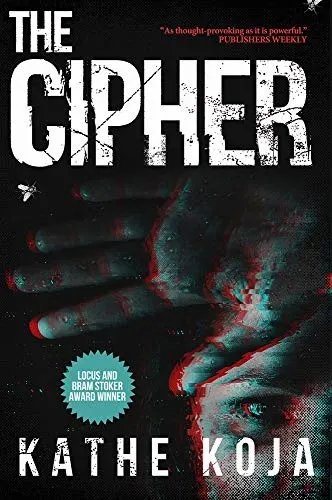
A struggling artist discovers a seemingly bottomless black aperture in a storage room, and curiosity rapidly turns into obsession. That spare premise becomes something filthy, intimate and hallucinatory: a portrait of a broke creative underground whose members cannot stop feeding their hungers, even when those hungers begin feeding on them.
The kinship with Vurt lies in the emotional grime. Koja understands that transcendence and degradation can feel almost identical, and that a portal into the impossible may magnify jealousy, vanity and need rather than liberate anyone. Winner of the Bram Stoker Award for first novel and long cherished as a cult classic, The Cipher has the dangerous aura of a book passed hand to hand. Its language feels fevered enough to stain your fingers.
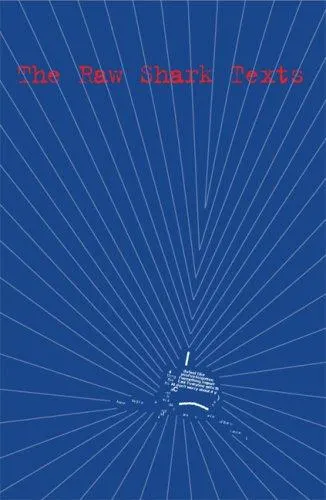
Eric Sanderson wakes without his memory and begins receiving letters from his former self, warning him about a predator that moves through language and information. Hall turns that irresistible opening into a typographically inventive pursuit through books, documents, conceptual spaces and the unstable architecture of identity.
What should attract a Vurt reader is not simply another breached reality, but the grief powering the breach. Hall’s wordplay, visual set pieces and audacious metaphysics remain tethered to longing for someone who may be unreachable; its cleverness hurts. The novel inspired unusually devoted readers, alternate texts and years of interpretive treasure-hunting, yet its deepest mystery is painfully direct: how much of yourself would you surrender to recover what you loved? Few novels since Vurt have made an invented reality feel so playful, perilous and emotionally necessary.