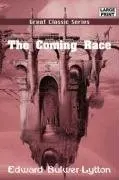
Books like Vril
What lingers in Vril is its audacious uncertainty: is the hidden civilization an ideal, a nightmare, a satire, or a prophecy delivered with a perfectly straight face? These novels sustain that same productive unease.
If you liked Vril, you’ll love these
Not lookalikes — kindred books. Each one shares something essential with Vril, and we tell you exactly what.
Butler turns an explorer’s account of an isolated society into a wonderfully deadpan assault on Victorian common sense. Its customs initially appear absurd, then begin exposing the absurd assumptions of the visitor—and of the reader.
Published just a year after Vril, Erewhon shares Bulwer-Lytton’s gift for making social criticism feel like speculative discovery. Its famous reflections on machines and evolution proved startlingly prescient, but the real pleasure is Butler’s calm, mischievous logic: every inversion is both a joke and an intellectual trap. For the Vril admirer who enjoys being unsure whether to marvel, laugh, or recoil, this is indispensable.
Three men arrive in a country governed entirely without men, bringing with them a cargo of assumptions about sex, strength, romance, and civilization. Gilman lets those assumptions indict themselves: her narrators believe they are evaluating Herland, while the novel quietly evaluates them.
That is precisely the game behind some of Vril’s sharpest scenes, especially its reversals of Victorian gender and courtship. Gilman makes the argument more sustained, lucid, and radical, yet preserves the fascination of touring a society whose apparent perfection keeps provoking awkward questions. Rediscovered after decades of neglect, Herland is now a foundational feminist utopia—and far funnier, stranger, and more narratively alive than that label suggests.
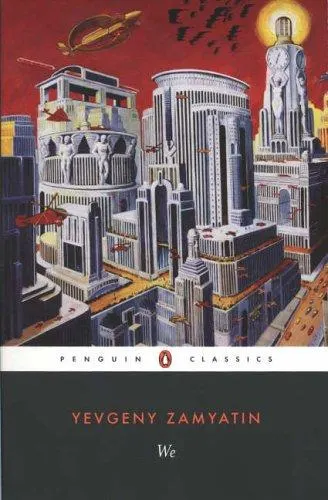
Zamyatin’s narrator is an engineer who records life in a mathematically ordered state of glass buildings, regulated hours, and absolute collective certainty. What makes the novel electrifying is not simply this society, but the voice describing it: fervent, precise, fractured, and increasingly unable to contain experiences for which his ideology has no language.
Like Vril, We presents technological perfection as both intoxicating and terrifying. Power has become an entire theory of humanity, and the narrator’s limited understanding makes every confident statement shimmer with irony. A landmark of modern dystopian fiction, it remains wilder and more formally daring than many of its descendants. Anyone captivated by Bulwer-Lytton’s vision of progress becoming alien will find Zamyatin’s masterpiece impossible to shake.