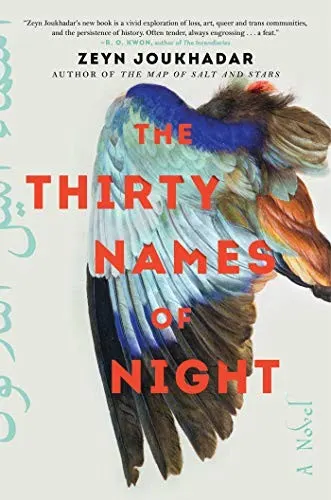
Books like The Thirty Names of Night
Reading The Thirty Names of Night feels like following a bird through darkness: grief, desire, family legend, and queer history briefly catch the light, then gather into a new way of belonging.
If you liked The Thirty Names of Night, you’ll love these
Not lookalikes — kindred books. Each one shares something essential with The Thirty Names of Night, and we tell you exactly what.
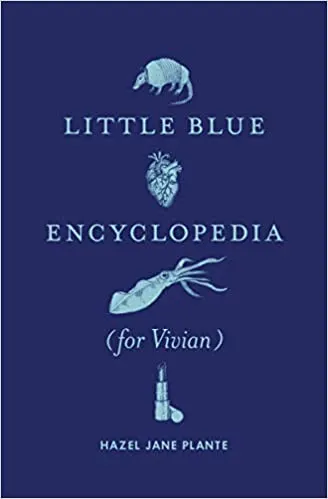
This Lambda Literary Award winner is one of the rare novels that understands grief as both an ache and a creative practice. Its narrator mourns Vivian, her brilliant trans friend, by compiling an encyclopedia of Vivian’s favorite cult television series—a show Plante invents so lovingly that its characters and mythology begin to feel remembered rather than fictional.
Like Joukhadar, Plante uses art to preserve a life that official records cannot hold. The entries gradually reveal a whole queer social world: friendships, jealousies, jokes, crushes, and the improvised forms of care through which trans people keep one another alive. It is formally playful but emotionally direct, intimate without becoming sentimental. Anyone moved by The Thirty Names of Night’s belief that mourning can become an archive—and an archive can become a home—should not miss it.
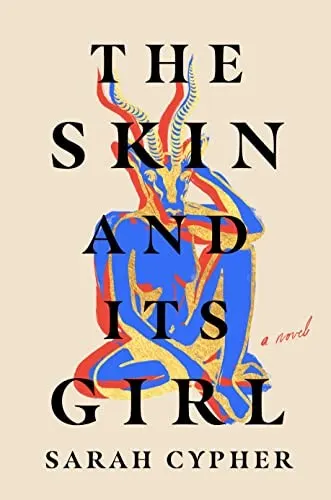
A queer Palestinian American woman, preparing to leave the country, looks back through the stories surrounding her great-aunt Nuha, who was born with startling blue skin. From that premise, Sarah Cypher builds a gorgeous family mythology about migration, secrecy, political violence, and the difficult bargain between protecting those we love and allowing them to be fully known.
Winner of the Stonewall Book Award’s Barbara Gittings Literature Award, the novel has the sensuous, fable-like density that makes Joukhadar’s work so absorbing: colors carry memory, family stories mutate in the telling, and the marvelous is inseparable from historical loss. Yet Cypher’s voice is distinctly her own—spiraling, intimate, and alert to every omission in an inherited story. This is a novel for readers who want queer ancestry not simplified into inspiration, but restored in all its beauty, compromise, and mystery.
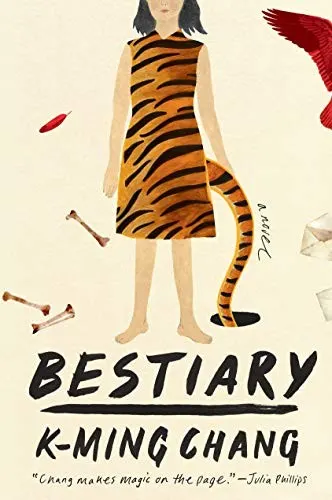
Bestiary begins with a family legend and proceeds as if language itself has grown teeth, wings, and a tail. Three generations of Taiwanese American women pass down stories of tigers, ghosts, bodies, hunger, and migration; meanwhile, a daughter falls in love and begins discovering how literally the past can inhabit her.
The kinship with Joukhadar lies in the novel’s refusal to separate bodily transformation from storytelling. Chang’s metaphors do not decorate experience—they alter its physics. Her prose is ferocious, funny, erotic, and deliberately unruly, turning inherited shame into a private mythology through which queer desire can speak. Acclaimed on publication as a singular debut, Bestiary has inspired unusually devoted readers because it feels less like a conventional family saga than a spell cast against silence. Its strangeness is exactly what makes its emotional truths impossible to forget.