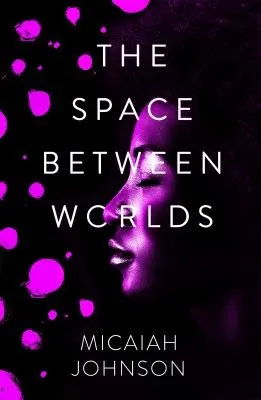
Books like The Space Between Worlds
The Space Between Worlds belongs beside Chain-Gang All-Stars: both turn ferocious speculative action into an indictment of who society treats as expendable.
If you liked The Space Between Worlds, you’ll love these
Not lookalikes — kindred books. Each one shares something essential with The Space Between Worlds, and we tell you exactly what.
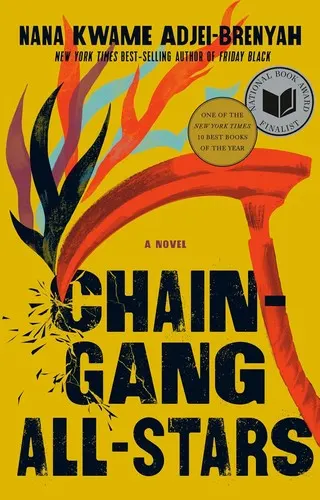
In a near-future America, incarcerated people fight televised death matches for the possibility of freedom. At its center are Loretta Thurwar and Hamara “Hurricane Staxxx” Stacker, lovers forced to survive as both human beings and marketable entertainment.
Like Micaiah Johnson, Adjei-Brenyah understands that exploitation works by turning people into data, spectacle and profit—and that intimacy can become an act of resistance. The fights are brutally propulsive, but footnotes and abrupt shifts in perspective keep exposing the vast machinery behind them. A National Book Award finalist, this is furious, inventive fiction whose moral pressure lingers long after the adrenaline fades.
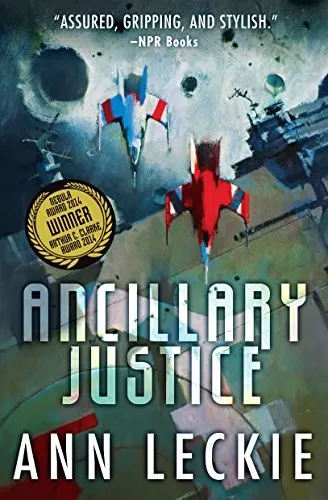
Breq was once a starship’s artificial intelligence, simultaneously inhabiting thousands of bodies; now she is confined to one fragile human form and pursuing a private reckoning with the empire that made her.
That fractured identity should resonate with anyone fascinated by Cara’s encounters with other versions of herself. Leckie likewise asks whether the self resides in the body, in memory, or in the choices one makes under an oppressive system. Yet the novel’s icy elegance is entirely its own, as are its startling treatment of gender and its portrait of imperial power. The first novel ever to win the Hugo, Nebula and Arthur C. Clarke awards, it earned that sweep by making space opera feel genuinely new.
Dietz joins a corporate army that transmits soldiers to battlefields as beams of light—but begins experiencing the war in the wrong order. The resulting disorientation is not a puzzle pasted onto a military thriller; it is the means by which Dietz discovers how thoroughly institutions can manipulate reality.
Hurley shares Johnson’s gift for revelations that simultaneously alter the plot and deepen its politics. Both novels feature hard-edged survivors navigating systems designed to consume them, without reducing those survivors to symbols. The Light Brigade is angry, muscular and extraordinarily fast, but beneath the firefights lies an urgent question: how do you preserve a coherent self when power controls the story of your life?