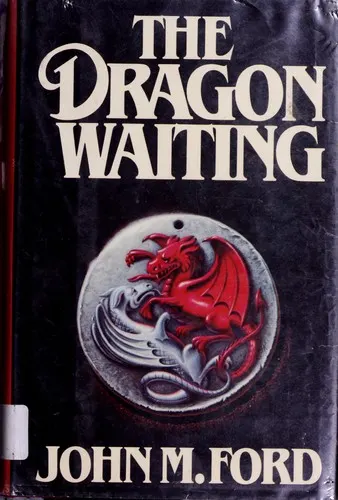
Books like The Dragon Waiting
And the vampires and Plantagenets are only part of the spell: Ford’s deeper pleasure lies in dangerous intelligence, history made unstable, and a narrative that expects the reader to keep up.
If you liked The Dragon Waiting, you’ll love these
Not lookalikes — kindred books. Each one shares something essential with The Dragon Waiting, and we tell you exactly what.
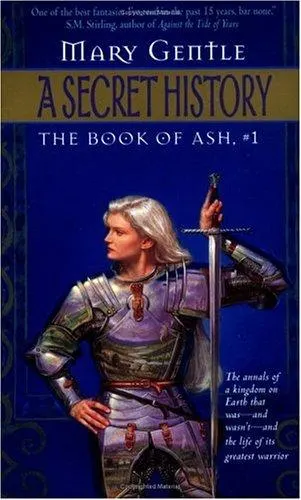
Ash is the closest thing to another vast, audacious act of historical sorcery. Its heroine commands mercenaries in fifteenth-century Europe, while a modern scholar’s translation of her life begins producing evidence that accepted history cannot contain. Gentle makes military logistics, theology, archival research, and the supernatural parts of one increasingly disquieting puzzle.
Like Ford, she withholds explanations without becoming arbitrary: strange details accumulate, political powers maneuver on incomplete knowledge, and apparent impossibilities acquire a formidable internal logic. The result is a book that rewards suspicion and rereading rather than passive immersion. Winner of the Sidewise Award for alternate history, Ash has become a touchstone for readers who want speculative fiction to be both intellectually rigorous and gloriously excessive.
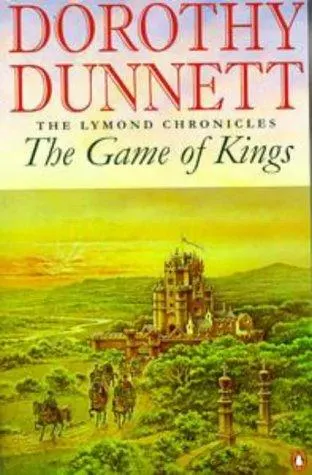
Remove Ford’s explicit magic and you reach one of his great literary kindred spirits. In 1547, the outlawed Francis Crawford of Lymond returns to Scotland amid invasion, factional conflict, and accusations of treason. Dunnett refuses to explain him—or much else—before she is ready. Motives hide inside jokes, performances, raids, and conversations whose significance may become clear hundreds of pages later.
The attraction is not merely intrigue but the exhilarating pressure of competing intelligences. Lymond can manipulate a room as decisively as an army, while the people opposing him are rarely fools. Dunnett’s six-volume Lymond Chronicles inspire extraordinary devotion, and The Game of Kings shows why: once its apparent chaos resolves into design, many readers immediately begin again to see how thoroughly they were outplayed.
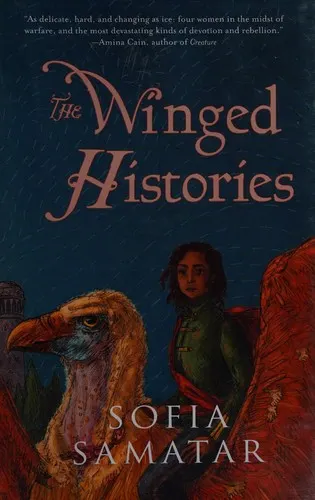
Samatar offers the emotional and linguistic counterpart to Ford’s political intricacy. Four women—a soldier, a scholar’s daughter, a singer, and an aristocrat—tell intersecting versions of a civil war, each exposing what the others cannot see. Empire survives through stories, sacred texts, inherited hierarchies, and selective memory; rebellion must therefore fight over language as fiercely as territory.
Where The Dragon Waiting makes history feel contingent, The Winged Histories makes it feel contested: no narrator owns the truth, yet every voice carries real authority. Samatar’s prose is sensuous and exact, and the novel’s fractured structure turns the reader into a historian sorting testimony from myth. It is a demanding, fiercely admired standalone whose beauty does not soften its political intelligence; missing it would mean missing one of modern fantasy’s boldest arguments about who gets written into history.