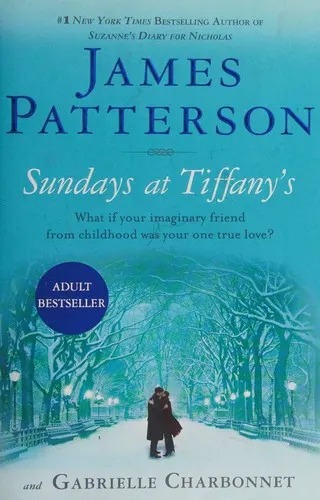
Books like Sundays at Tiffany's
The magic of Sundays at Tiffany’s is not simply that Michael returns; it is the relief of Jane being seen by someone who remembers the self everyone else taught her to suppress. These novels offer that same blend of enchantment, yearning, and emotional rescue.
If you liked Sundays at Tiffany's, you’ll love these
Not lookalikes — kindred books. Each one shares something essential with Sundays at Tiffany's, and we tell you exactly what.

Elizabeth Egan has organized every trace of spontaneity out of her life—until Ivan, the exuberant invisible friend of the nephew she is raising, somehow becomes visible to her. The resemblance in premise is unmistakable, but the deeper bond lies in watching an overburdened woman recover her capacity for wonder, risk, and intimacy.
Ahern brings the openhearted emotional directness that made P.S. I Love You a phenomenon, tempered here by Irish melancholy and playful magic. Ivan does not merely offer Elizabeth romance; he challenges the defensive identity she has mistaken for adulthood. For anyone moved by Jane’s realization that love can restore a buried self, this is nearly irresistible.
Josey Cirrini lives under her imperious mother’s scrutiny, concealing sweets and romance novels in her bedroom closet. Then she discovers that a bold, unruly woman named Della Lee has taken up residence there—and is determined to push Josey toward a life of her own.
Allen’s magic is quieter than Patterson and Tiernan’s, appearing as an intimate extension of longing rather than a set of supernatural rules. What matches Sundays at Tiffany’s is Josey’s awakening: the movement from dutiful invisibility toward appetite, friendship, and the possibility of being cherished. Allen has earned a devoted readership for precisely this warm, fragrant, slightly enchanted kind of emotional transformation, and The Sugar Queen is among its most satisfying expressions.
Newly widowed Lucy Muir refuses to remain under her relatives’ control and moves with her children into a seaside house inhabited by the formidable ghost of Captain Daniel Gregg. Their initial clashes gradually reveal something rarer: two lonely, strong-willed people who recognize each other across an impossible divide.
Lucy’s growing independence gives the novel its backbone, while her connection with the captain supplies the wit, tenderness, and ache. First published in 1945, it inspired the beloved film and television series because its central fantasy remains potent—the hope that the person who understands us most completely might transcend even ordinary reality. Its final emotional resonance makes this slender classic difficult to forget.