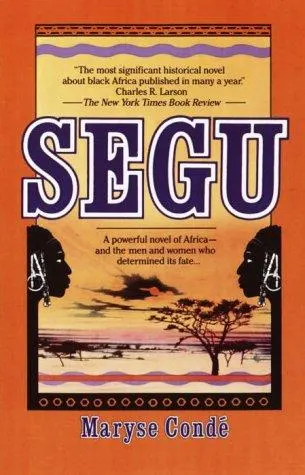
Books like Segu
Crossroads. *Segu* turns history into lived experience: faith, trade, slavery, family loyalty, and political upheaval meet inside complicated people rather than in a textbook. These novels achieve a similar breadth without sacrificing intimacy or moral ambiguity.
If you liked Segu, you’ll love these
Not lookalikes — kindred books. Each one shares something essential with Segu, and we tell you exactly what.
Sembène’s classic begins with the 1947 railway strike linking Dakar and Bamako, then disperses its attention across workers, families, elders, and traders. Like Condé, he refuses to let history belong only to rulers or celebrated men: women, children, and entire households become political actors, while hunger and argument make every grand principle tangible.
What makes the novel indispensable is its collective energy. Its many characters do not merely illustrate a cause; they quarrel, improvise, fail one another, and discover capacities they did not know they possessed. Sembène—later the foundational figure of African cinema—writes with the directness of an oral storyteller and the scale of an epic. Readers who loved *Segu* as a teeming social world, not simply as a historical narrative, should not miss one of the great novels of African solidarity.
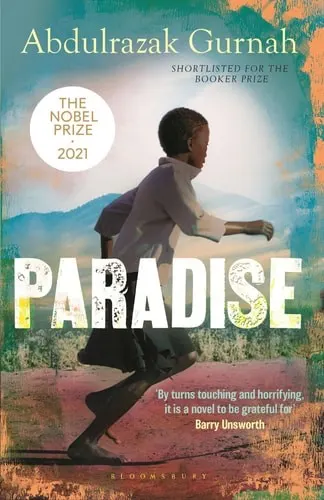
A boy named Yusuf is taken from his parents into the household of a wealthy merchant and gradually enters the alluring, perilous commercial world of early-twentieth-century East Africa. Gurnah renders markets, gardens, caravans, religious life, and competing languages with sensuous precision—but beauty never conceals the relationships of debt and power underneath.
A Booker Prize finalist by the future Nobel laureate, *Paradise* has *Segu*’s gift for presenting Africa before European domination as already cosmopolitan, contested, and historically dynamic. Islam, indigenous traditions, commerce, and the first pressure of European conquest overlap without collapsing into a simple opposition between African innocence and foreign corruption. The novel’s dreamlike radiance and quiet menace make it feel both intimate and immense.
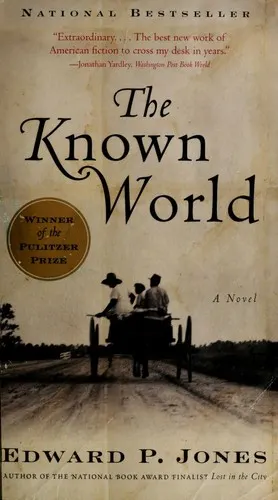
Jones’s Pulitzer Prize–winning novel opens after the death of Henry Townsend, a Black slaveholder in antebellum Virginia, and expands outward through the people whose lives touched his. That premise is not a historical curiosity or a trick: it lets Jones examine how an oppressive order recruits desire, affection, ambition, and self-deception to sustain itself.
The deepest kinship with *Segu* lies in Jones’s astonishing moral vision. He moves among dozens of consciousnesses with complete authority, granting each person specificity while absolving no one through sentimentality. Families are divided by institutions they partly resist and partly reproduce; private choices become historical forces. Few novels make a vanished society feel so populous—or show so powerfully that knowing its structures does not mean you have exhausted its human mysteries.