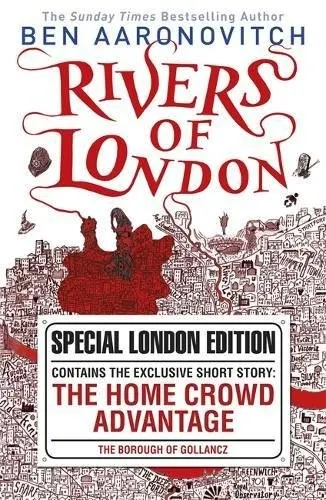
Books like Rivers of London
—because much of the pleasure lies in watching intelligence, bureaucracy, and the uncanny collide, these three preserve Aaronovitch’s distinctive appeal without simply reproducing his premise.
If you liked Rivers of London, you’ll love these
Not lookalikes — kindred books. Each one shares something essential with Rivers of London, and we tell you exactly what.
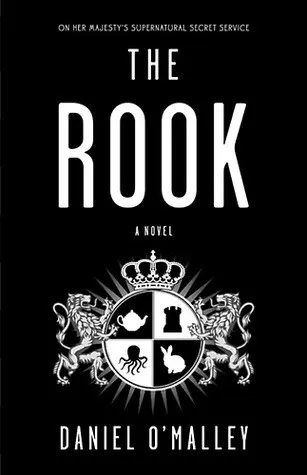
Myfanwy Thomas wakes in a London park with no memory, surrounded by bodies wearing latex gloves and carrying a letter written by her former self. She soon discovers that she holds a senior post in the Checquy, Britain’s secret supernatural civil service.
Like Rivers of London, this is wonderfully alert to the absurdity of administering the impossible: paranormal powers coexist with security clearances, committee politics, filing systems, and terrifying performance reviews. Myfanwy’s dry intelligence makes her enormously appealing, while the mystery gives her competence room to emerge piece by piece. Winner of an Aurealis Award, The Rook has become a touchstone of bureaucratic fantasy—and its blend of ingenious plotting and institutional comedy is difficult to resist.
If Aaronovitch made you love London as something older, stranger, and more alive than its inhabitants realize, Kate Griffin’s novel is essential. Matthew Swift returns after two years dead, and the London awaiting him is charged with magic generated by telephone wires, graffiti, Tube tunnels, traffic, neon, and the accumulated habits of millions.
Griffin does not merely set fantasy in London; she derives an entire magical vocabulary from how the city moves and sounds. Her prose can be funny, feverish, and incantatory, turning familiar streets into forces with appetites of their own. It is darker and wilder than Rivers of London, but it shares Aaronovitch’s conviction that urban history is not background—it is power. Few novels have imagined the magic of a modern city with such originality.
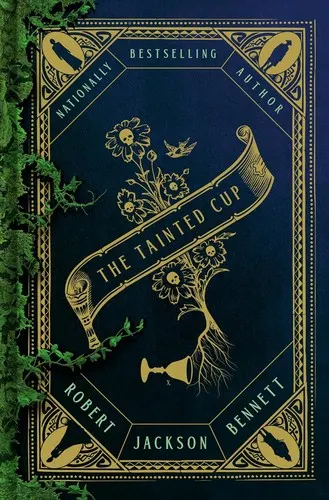
For readers who especially relish Peter Grant investigating magic rather than merely encountering it, this Hugo-winning fantasy mystery offers a superb new obsession. Dinios Kol is an apprentice investigator whose altered memory records every detail; his superior, Ana Dolabra, is an eccentric genius who prefers to solve crimes without leaving her rooms. Their first case begins with an impossible death involving a tree erupting through a man’s body.
Bennett builds the mystery fairly and meticulously, letting observation, interviewing, classification, and inspired deduction do real work. The pairing of conscientious junior officer and formidable mentor has much of Peter and Nightingale’s appeal, while the biologically engineered empire around them is governed by rules that are gradually uncovered rather than hand-waved. It is witty, gruesome, intellectually satisfying, and proof that rigorous detection becomes even more pleasurable when reality itself may be evidence.