
Books like Patience and Sarah
You loved more than a pioneering lesbian love story: you loved its plainspoken courage, its tenderness toward work and desire, and its conviction that two women might build a life rather than merely survive one. These three novels carry that promise in strikingly different voices.
If you liked Patience and Sarah, you’ll love these
Not lookalikes — kindred books. Each one shares something essential with Patience and Sarah, and we tell you exactly what.
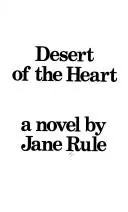
Rule’s quietly radical 1964 classic begins with Evelyn Hall arriving in Reno for a divorce and meeting Ann Childs, a younger woman whose independence unsettles her careful self-command. Like Routsong, Rule treats lesbian desire not as a diagnosis or sensational transgression but as a serious claim upon an ordinary life.
The kinship lies especially in the emotional restraint: hesitation, attention, and small acts of honesty matter more than melodrama. Rule’s lucid prose lets attraction gather weight almost imperceptibly, while her intelligent adult characters confront the cost of believing their own feelings. Long cherished as a landmark of lesbian fiction—and adapted into the beloved film Desert Hearts—it remains one of the rare classics whose historical importance is matched by its capacity to make readers ache.
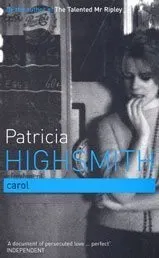
Therese Belivet, lonely and uncertain of what she wants, is working behind a department-store counter when the poised Carol Aird enters her life. Highsmith renders their attraction through glances, silences, telephone calls, and the charged significance of being chosen: every ordinary detail seems to awaken.
What will speak to a Patience and Sarah reader is the novel’s refusal to regard love between women as inherently unreal. Its world is more anxious and psychologically shadowed than Routsong’s, but it shares her daring insistence that such desire has a future tense. Published in 1952 under a pseudonym, it became a touchstone passed eagerly from reader to reader because it offered possibilities that contemporary fiction usually denied. Its suspense is not merely whether love can survive, but whether its characters can imagine themselves entitled to it.
Under Uruguay’s dictatorship, five queer women begin escaping Montevideo for a remote strip of coast where they can swim, argue, flirt, cook, and briefly speak without disguise. De Robertis makes their refuge palpable—the salt, cramped rooms, shared food, hard-won privacy—so that freedom becomes something built by hand.
This is the recommendation for the reader who treasured the homesteading heart of Patience and Sarah. Here too, love is inseparable from labor, place, and the creation of a world inhospitable society has failed to provide. But Cantoras broadens the intimate partnership into a vivid, unruly chosen family whose members wound, sustain, and transform one another. The Stonewall Book Award–winning novel has the sweep of political history without sacrificing bodily warmth; skipping it would mean missing one of contemporary fiction’s richest accounts of queer people making room to live.