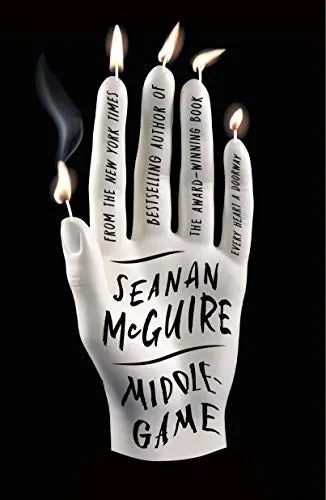
Books like Middlegame
Convergence. Middlegame works because its grand design—alchemy, mathematics, language, broken chronology—never overwhelms the painfully human bonds caught inside it. These novels achieve that same union of cerebral wonder and emotional urgency.
If you liked Middlegame, you’ll love these
Not lookalikes — kindred books. Each one shares something essential with Middlegame, and we tell you exactly what.
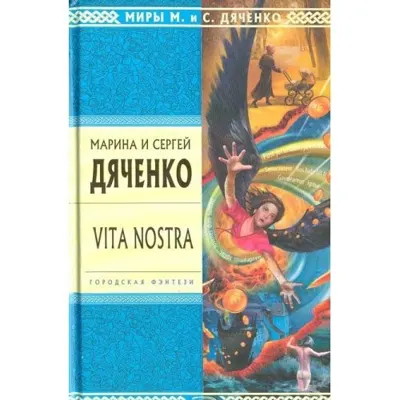
Sasha Samokhina is coerced into performing baffling exercises, then sent to an institute where education feels like psychological warfare and every lesson threatens to alter what she is. Like Middlegame, Vita Nostra treats language and abstract thought not as decorations on magic but as the machinery of reality.
The Dyachenkos make incomprehension exhilarating: rules emerge slowly, assignments acquire terrifying significance, and intellectual discovery becomes inseparable from bodily and emotional transformation. This internationally beloved Ukrainian novel has earned a devoted readership precisely because it feels unlike standard fantasy. If Middlegame made you crave metaphysics with teeth, Vita Nostra is indispensable.
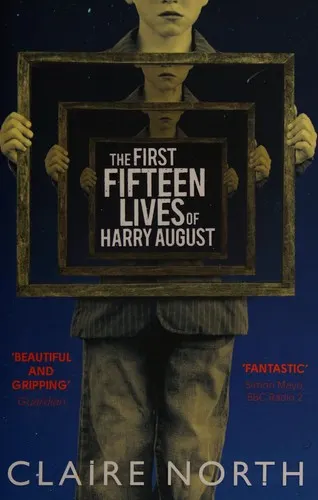
Harry August remembers every life he has lived. Each time he dies, he begins again in the same circumstances, carrying decades of knowledge with him—until a message delivered at the end of one life reveals that history itself is in danger.
This is the recommendation for readers who loved Middlegame’s recursive structure and its sense that chronology can become a battleground. North turns repetition into strategy: tiny choices accumulate, knowledge becomes both weapon and burden, and the book’s vast temporal design remains anchored in loneliness, loyalty, and obsession. Winner of the John W. Campbell Memorial Award, it is one of the rare time-loop novels whose formal cleverness deepens rather than replaces its emotional stakes.
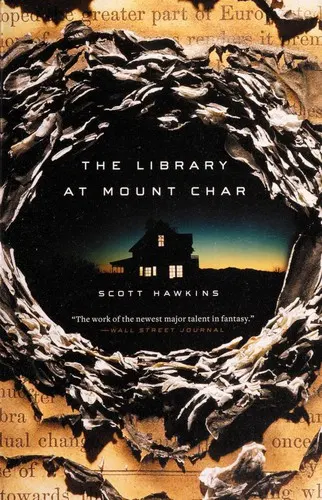
Carolyn and her adopted siblings were raised by the terrifying man they call Father, each trained in one forbidden branch of knowledge. Now Father is missing, the Library is unguarded, and the damaged children he made must decide what they owe one another—and what they are willing to become.
The kinship with Middlegame lies in its fusion of abused, supernaturally engineered children; specialized powers; fractured family intimacy; and a plot whose apparent chaos gradually reveals ruthless design. Yet Hawkins writes in a register entirely his own: savage, deadpan, grotesque, and unexpectedly tender. An Alex Award winner that has become a cult favorite, The Library at Mount Char offers the rare pleasure of a cosmic puzzle-box whose final impact is as emotional as it is audacious.