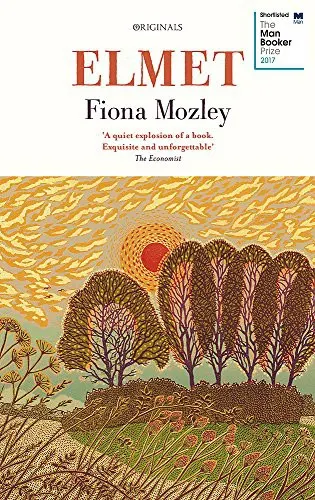
Books like Elmet
When the law belongs to those who own the land, what can loyalty demand of a family? These novels share Elmet’s deepest strengths: fierce kinship, contested ground, lyrical menace, and violence rooted in power rather than spectacle.
If you liked Elmet, you’ll love these
Not lookalikes — kindred books. Each one shares something essential with Elmet, and we tell you exactly what.
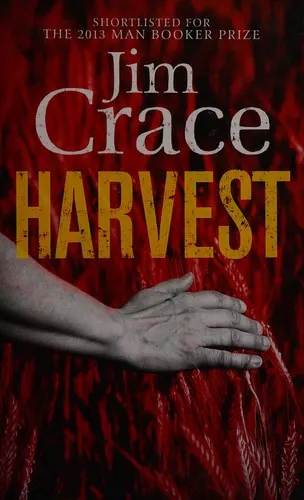
Crace’s Booker-shortlisted, International Dublin Literary Award-winning novel turns a remote farming settlement into a whole moral world. A fire, the arrival of strangers, and a change in ownership disturb customs that had seemed as permanent as the fields.
Like Elmet, Harvest understands land as livelihood, memory, identity, and an instrument of coercion. Its conflict is intimate but also historical: ordinary people discover how little tradition protects them when property asserts its rights. Crace’s burnished, incantatory prose makes threshing, smoke, mud, and fear feel almost biblical. If Mozley’s ability to fuse social anger with dark pastoral beauty held you, Harvest is indispensable.
Seventeen-year-old Ree Dolly must find her missing father before his disappearance costs her family their home. She moves through an Ozarks community governed less by official law than by blood ties, silence, obligation, and threat.
Ree has something of Cathy’s flinty courage, but Woodrell never reduces her to a generic “strong heroine”: her toughness grows from daily care for younger siblings and a precise understanding of danger. His prose is leaner than Mozley’s, yet just as alert to weather, hunger, bodies, and the codes of people ignored by respectable society. Winter’s Bone is a fiercely admired classic of rural noir, but its real force lies in making family devotion feel both sustaining and perilous.
Presented as a collection of nineteenth-century documents surrounding a young Scottish crofter accused of murder, this Booker Prize finalist asks who gets to define a violent act—and whose account will be believed.
The documentary form is very different from Elmet’s dreamlike narration, but the novels meet at a deeper point: both examine what happens when humiliation, tenancy, class power, and family loyalty become inseparable. Burnet makes every testimony feel compromised by status and self-interest; even apparently neutral language carries the pressure of authority. The result is gripping as a crime novel and unsettling as a study of how institutions turn suffering into evidence. Readers haunted by Elmet’s collision between private justice and public judgment should not miss it.