Books like Burnt Offerings
The Elementals makes blazing daylight sinister; The Auctioneer finds equal terror in ordinary politeness. Along with The House Next Door, these novels share Burnt Offerings’ deepest pleasures: incremental surrender, domestic spaces turned against their owners, and bargains whose true cost becomes visible only when escape is nearly impossible.
If you liked Burnt Offerings, you’ll love these
Not lookalikes — kindred books. Each one shares something essential with Burnt Offerings, and we tell you exactly what.
Two wealthy Southern families retreat to three Victorian houses on an isolated Alabama beach—one of which is slowly filling with sand. McDowell replaces the expected haunted-house gloom with scorching sun, white dunes, sharp family comedy, and an evil that seems inseparable from the landscape.
Like Marasco, he understands that horror becomes more disturbing when domestic rituals continue around it. Meals are eaten, old grievances aired, and children roam while the impossible acquires the familiarity of bad weather. A cult favorite from the author of Blackwater, The Elementals is funny, elegant, and capable of making a bright, empty room feel unendurable.
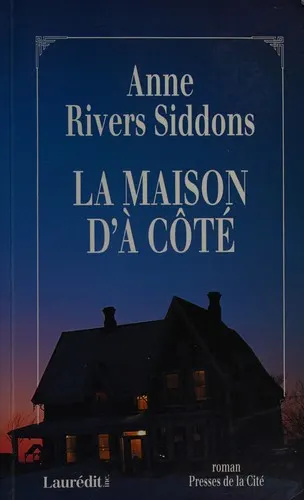
The threat here is not a decaying mansion but a newly built modern home in an affluent Atlanta neighborhood. From her own house next door, Colquitt Kennedy watches its first occupants move in—and begins to suspect that the building itself has a malign character.
Siddons matches Marasco’s gift for tying supernatural dread to aspiration. Taste, property, marriage, and social respectability become vulnerabilities; the desire for a beautiful home helps people explain away what should send them running. Stephen King’s enthusiastic discussion of the novel in Danse Macabre helped secure its lasting reputation, and deservedly so: few books are better at making architectural perfection feel morally ravenous.
This is the recommendation for the reader most haunted by the bargain at the heart of Burnt Offerings. In a quiet New Hampshire town, an ingratiating auctioneer begins asking residents to donate unwanted possessions for community sales. His requests remain outwardly reasonable even as they become more frequent and harder to refuse.
Samson builds terror through accumulation: one concession, one rationalization, one surrendered object at a time. The family at the novel’s center does not foolishly walk into obvious danger; it is pressured into cooperating with its own dispossession. Published in 1975 as Samson’s only novel and later revived through the Paperbacks from Hell series, The Auctioneer has earned devoted readers because its coercion feels horribly plausible. It turns neighborliness into a trap—and may be the closest match for Marasco’s inexorable logic of sacrifice.