
Books like All Systems Red
…because the real hook is Murderbot’s prickly interior life: lethal competence, corporate dehumanization, bone-dry comedy, and care disguised as annoyance. These three novels strike those same nerves in distinctly different ways.
If you liked All Systems Red, you’ll love these
Not lookalikes — kindred books. Each one shares something essential with All Systems Red, and we tell you exactly what.

Breq appears to be one human traveler, but she was once the consciousness of a vast troop carrier, simultaneously inhabiting a ship and thousands of ancillary bodies. Now reduced to a single body, she is pursuing a private purpose through an empire that treats people as tools.
Murderbot readers will recognize the tension between machine identity and imposed human categories, along with the pleasure of watching an artificial intelligence understand its supposed owners better than they understand themselves. Leckie’s voice is cooler and more ceremonial than Wells’s, but similarly alert to the gap between what a narrator feels and what it will admit. The novel also turns questions of pronouns, bodies, ownership, and loyalty into gripping personal stakes rather than abstract philosophy. Its rare sweep of the Hugo, Nebula, and Arthur C. Clarke awards was deserved: this is one of the defining science-fiction debuts of its generation.
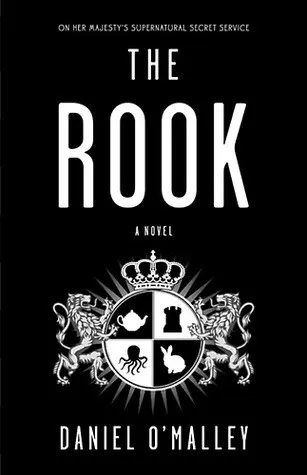
Myfanwy Thomas wakes in a London park surrounded by bodies wearing latex gloves. She has no memory, but a letter in her pocket—written by the person she used to be—provides instructions for surviving her job in Britain’s secret supernatural bureaucracy.
The kinship here is tonal. Like Murderbot, Myfanwy combines private panic and caustic observation with an unnervingly capable public performance. O’Malley gets enormous comic mileage from treating the impossible as office work: monsters require forms, apocalypses involve committee meetings, and institutional betrayal arrives wrapped in procedure. Yet the jokes never diminish Myfanwy’s struggle to decide whether she must remain the person her organization designed her to be. Winner of the Aurealis Award for best science-fiction novel, The Rook is the rare bureaucratic fantasy whose paperwork is nearly as entertaining as its spectacular confrontations.

Rex is a genetically engineered military Bioform: enormous, armed, obedient, and desperate to be a Good Dog. His human Master gives the orders, while the other creatures in Rex’s unit supply specialized skills—and perspectives he has never been encouraged to develop.
Where All Systems Red hides tenderness behind sarcasm, Dogs of War hides devastating moral intelligence inside the language of programmed obedience. Tchaikovsky makes Rex’s limited vocabulary a source of suspense and emotion: the reader can see exploitation, euphemism, and responsibility taking shape before Rex has words for them. The action is fierce, but the novel’s lasting force comes from its insistence that a being created as property can still become a moral agent. Few books explore the distinction between following orders and choosing to protect others with such clarity—or make that distinction hurt so much.