Author
Books like Vernor Vinge
3 books we recommend to Vernor Vinge readers, drawn from A Deepness in the Sky — each with the reason why.
If you loved A Deepness in the Sky
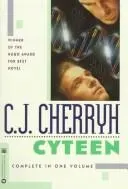
Cherryh shares Vinge’s fascination with societies that treat human minds as programmable infrastructure. On Cyteen, political power rests on cloning, psychological conditioning, and the ability to manufacture loyalty; after the death of a dominant scientist, her allies attempt an audacious reconstruction of both person and power.
Like Deepness, this Hugo winner demands attention and rewards it magnificently. Conversations operate on several levels, institutions behave like intelligent predators, and apparent victims may be learning how to manipulate their handlers. Cherryh’s psychological precision makes coercion more frightening than any weapon. If the Focused workers and Ezr Vinh’s long struggle against an all-encompassing system were central to your love of Vinge’s novel, Cyteen is indispensable.
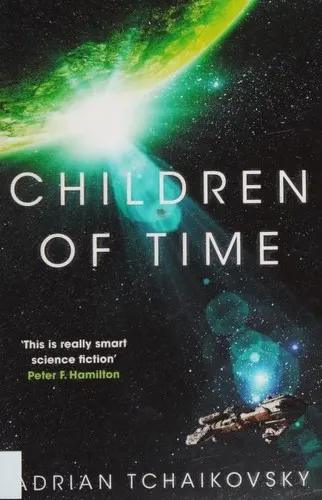
The spiders are the obvious connection, but not the important one. Tchaikovsky, like Vinge, performs the much harder feat of making a genuinely nonhuman civilization intelligible from within. Across generations, biological inheritance, technical improvisation, religious metaphor, and social conflict accumulate into history.
Meanwhile, the remnants of humanity approach with their own desperate assumptions. The pleasure lies in watching two trajectories develop at radically different scales and realizing how thoroughly intelligence is shaped by bodies, environments, and inherited stories. Winner of the Arthur C. Clarke Award and now a modern space-opera touchstone, Children of Time has earned its devoted readership through the same combination of conceptual audacity and narrative momentum that makes Deepness so rereadable.
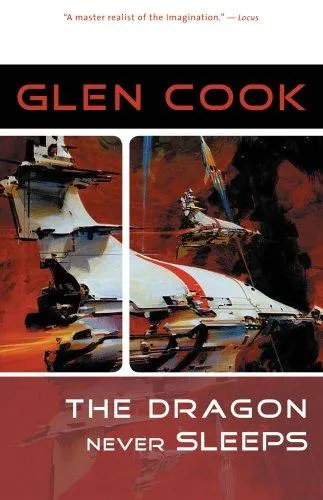
For readers intoxicated by the strategic machinery of Deepness, this is the less obvious treasure. Cook imagines a civilization policed by ancient Guardships whose immortal crews preserve order through overwhelming force, secrecy, and carefully cultivated fear. Then competing factions begin testing the system’s limits.
Cook writes space opera like compressed military history: alliances shift, plans nest inside counterplans, and every institution carries centuries of grudges and contingency measures. The cast is large and the exposition uncompromising, but the resulting sense of an old, dangerous civilization in motion is extraordinary. Long regarded as a cult classic among Cook’s readers, The Dragon Never Sleeps offers that rare Vingean exhilaration of watching highly competent people gamble against structures almost too vast to understand.