Author
Books like Stewart O'Nan
3 books we recommend to Stewart O'Nan readers, drawn from Last Night at the Lobster — each with the reason why.
If you loved Last Night at the Lobster
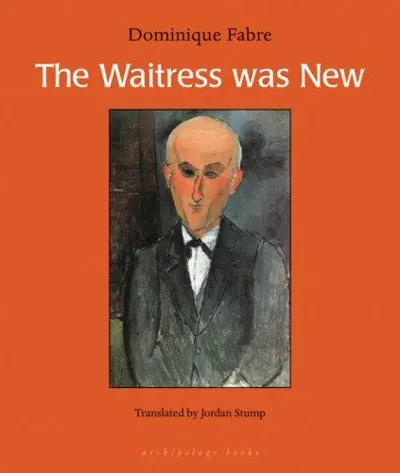
Pierre, a fifty-six-year-old bartender in a modest suburban Paris café, observes his coworkers and regulars with the practiced attentiveness of someone whose job has become his way of understanding people. Like Manny, he notices everything: absences, moods, small failures of courtesy, the subtle disorder that signals someone may be in trouble.
Fabre’s short novel has O’Nan’s rare respect for service work and its improvised communities. Its plainspoken voice gradually reveals loneliness, loyalty, and fear without demanding sympathy. This little-known gem is perhaps the closest companion to Last Night at the Lobster: another quiet book whose apparent modesty conceals a devastating knowledge of what work gives us—and what disappears when the workplace does.
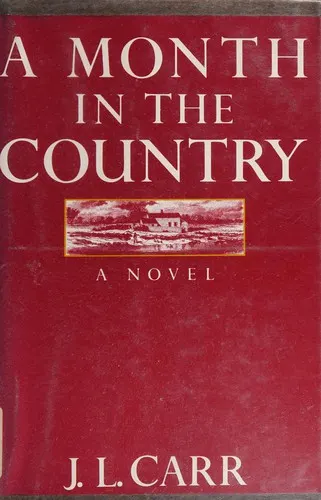
A damaged First World War veteran arrives in a Yorkshire village to uncover a medieval painting hidden beneath layers of whitewash. What follows is brief, summery, and almost unbearably restrained: a novel about skilled work, tentative friendship, and a happiness recognized most clearly after it has passed.
Readers who love O’Nan’s ability to make routine tasks emotionally consequential will respond to Carr’s exact descriptions of restoration and to all the feeling he leaves unspoken. Shortlisted for the Booker Prize and winner of the Guardian Fiction Prize, it has become a quiet classic precisely because its sadness never begs for attention. Its final pages cast a light backward over everything before them; few novels this small leave such a large ache.
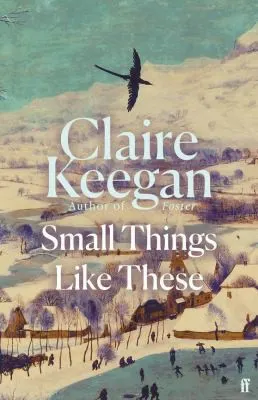
Bill Furlong, a coal merchant in a small Irish town, spends the weeks before Christmas making deliveries, managing his men, supporting his family, and noticing what others prefer not to see. Keegan renders invoices, yards, weather, fatigue, and practical responsibility with the same seriousness O’Nan gives Manny’s snowbound restaurant.
But the deepest kinship lies in their understanding of decency. Both novels ask what being a good man means when institutions reward silence, convenience, or surrender. Keegan’s crystalline prose makes every gesture carry moral weight without turning Bill into a symbol rather than a person. Booker-shortlisted and winner of the Orwell Prize for Political Fiction, this is a compact, luminous novel that proves quiet goodness can generate extraordinary suspense.