Author
Books like Sayaka Murata
3 books we recommend to Sayaka Murata readers, drawn from Convenience Store Woman — each with the reason why.
If you loved Convenience Store Woman
A woman exhausted by her previous career asks for work requiring almost no thought, then cycles through a series of increasingly peculiar jobs. Tsumura understands, as Murata does, that employment is never merely employment: every workplace has its own language, rituals, loyalties, and quiet demands on the personality.
The comedy is gentler than Convenience Store Woman’s, but just as exact. Mundane tasks gradually acquire an absurd, dreamlike intensity, while the narrator’s apparent passivity conceals a stubborn search for a tolerable way to live. Tsumura, an Akutagawa Prize winner renowned for writing about working life, makes burnout, boredom, and office etiquette unexpectedly engrossing. If Keiko’s devotion to the store’s rhythms made perfect emotional sense to you, this novel will feel like discovering an entire secret literature of work.
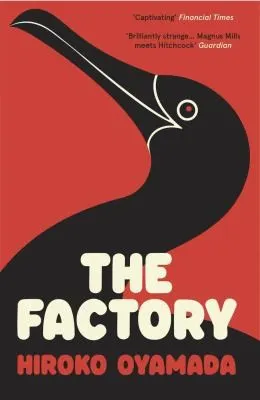
Three people take jobs at an enormous factory whose purpose and boundaries become increasingly difficult to comprehend. One shreds documents; another studies moss; a third proofreads material no one seems likely to read. Oyamada never forces the strangeness. She reports it in calm, practical prose until institutional life itself begins to look like the surreal element.
This brief novel shares Murata’s ability to make deadpan comedy turn imperceptibly into existential unease. It captures the peculiar comfort of surrendering to a system—and the terror of realizing that the system may have absorbed your sense of time, value, and identity. Winner of Japan’s Shincho Prize for New Writers, The Factory is compact enough to read in an evening and uncanny enough to alter how the next workday looks.
An unnamed narrator watches a woman in a purple skirt with extraordinary attention: where she sits, what she buys, how children react to her, and eventually how she enters a new workplace. The voice is funny, intimate, and increasingly disquieting, turning everyday observation into something between companionship, surveillance, and longing.
Like Convenience Store Woman, Imamura’s novel is fascinated by the tiny behaviors through which a person becomes socially legible. Its women are judged by how convincingly they inhabit prescribed roles, while the narrator herself remains almost invisible. Imamura’s precision earned the novel Japan’s prestigious Akutagawa Prize, but its real distinction is the spell cast by its voice: apparently simple, compulsively readable, and impossible to trust completely. Readers who loved Keiko’s skewed lucidity should not miss this stranger, slipperier perspective on belonging.