Author
Books like Robert W. Chambers
3 books we recommend to Robert W. Chambers readers, drawn from The King in Yellow — each with the reason why.
If you loved The King in Yellow
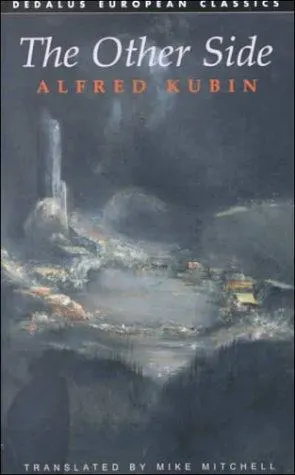
A draughtsman is invited to the Dream Kingdom, an isolated realm ruled by the enigmatic Claus Patera. Its capital initially resembles a refuge from modernity, but everything there—weather, architecture, faces, even time—seems subject to an obscure and increasingly malignant design.
Kubin, a major Expressionist illustrator, made this his only novel and furnished it with his own nightmarish drawings. Like Chambers, he creates dread through symbols that feel meaningful without becoming decipherable. The Dream Kingdom has Carcosa’s impossible geography and decadent beauty, while Kubin’s visual imagination makes every street and room feel contaminated. This landmark of fantastic literature is among the rare books that truly seem to have been dreamed rather than written.
Years after three friends attempted an occult ritual, their lives remain warped by something they cannot properly remember or name. Harrison concentrates not on the ceremony but on its aftermath: evasive conversations, damaged relationships, shabby English landscapes and tantalizing glimpses of a transcendent realm called the Pleroma.
This is the recommendation for readers who loved Chambers’s omissions—the scraps of mythology, fatal hints and sense that a complete explanation would only diminish the horror. Harrison’s exquisitely controlled prose also gives the supernatural real emotional weight: forbidden knowledge becomes regret, longing and the ruin left by one youthful act. It is a fiercely admired modern weird novel whose mysteries deepen, rather than dissolve, on rereading.
A researcher investigates twenty days of sleeplessness and inexplicable violence that once seized Turin. Testimony contradicts testimony; officials prefer silence; and an institution called the Library allowed citizens to deposit their most private writings for strangers to read.
De Maria reproduces the most unsettling quality of Chambers’s imagined play: language does not simply describe madness but circulates it. His city is at once recognizable and metaphysically wrong, its public spaces haunted by forces that remain just outside comprehension. First published in Italy in 1977 and rediscovered in English decades later, the novel became a cult classic partly because its Library now looks uncannily like a prophecy of social media. Yet its real power is timeless—the conviction that a whole society can encounter the impossible and then agree not to speak of it.