Author
Books like Olga Ravn
3 books we recommend to Olga Ravn readers, drawn from The Employees — each with the reason why.
If you loved The Employees
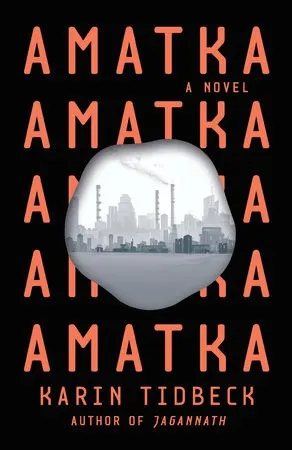
Vanja arrives at a remote colony to conduct market research, only to find that everyday objects must be repeatedly named or risk losing their form. Tidbeck makes bureaucracy feel metaphysical: labels, reports, rules, and approved phrases do not merely describe reality but hold it together.
A reader who loved Ravn’s employee statements will recognize the friction between official language and private longing, along with the unsettling possibility that personhood itself is maintained by workplace consensus. Yet Amatka develops that tension into something uniquely its own—an austere, haunting novel about what happens when imagination becomes both danger and liberation. Tidbeck’s reputation for visionary speculative fiction is fully justified here: few novels make language feel so materially alive.
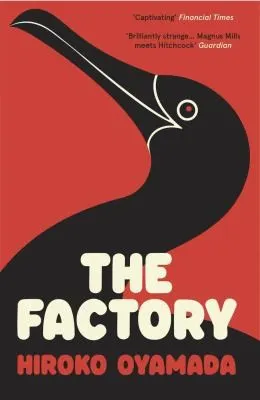
Three people take bafflingly narrow jobs at an enormous factory: one shreds documents, another proofreads incomprehensible papers, and a third studies moss. Their tasks are described with such calm precision that the irrational begins to seem normal—and the normal grotesque.
Like The Employees, this Shincho Prize-winning novel understands work as an environment that alters perception. Days blur, organisms proliferate, and the factory becomes less a building than an ecosystem whose boundaries nobody can locate. Oyamada’s deadpan humor makes the alienation funny before making it frightening. It is short, inexhaustibly strange, and likely to change how you look at every harmless office procedure.
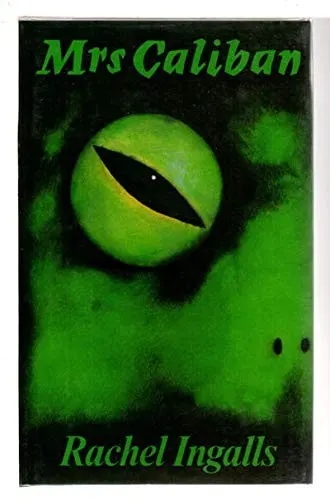
Ravn’s novel is most piercing when its supposedly nonhuman workers reveal capacities for tenderness, grief, and desire that their human supervisors cannot adequately measure. Mrs Caliban takes that emotional problem and gives it an intimate, startling form: an unhappy housewife encounters an amphibious humanoid who has escaped from a research institute.
Ingalls refuses both monster-story sensationalism and easy allegory. Her prose is lucid, restrained, and quietly devastating; the extraordinary relationship exposes how marriage, domestic labor, and scientific classification decide whose feelings count. Once neglected, the novel acquired a devoted cult reputation because its odd premise opens into genuine emotional truth. It is one of those rare books whose brevity only intensifies its hold on the reader.