Author
Books like Natsuo Kirino
3 books we recommend to Natsuo Kirino readers, drawn from Out — each with the reason why.
If you loved Out
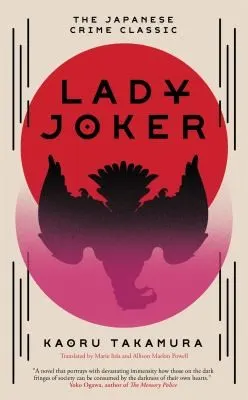
Takamura turns crime into a cross-section of an entire society. A group of alienated men targets a major Japanese corporation, but the novel’s real subject is the machinery surrounding them: precarious labor, corporate secrecy, discrimination, policing, and the quiet humiliations that accumulate until revenge acquires its own logic.
Like Kirino, Takamura refuses to divide the world neatly into criminals and respectable people. She moves patiently among competing perspectives, showing how institutions deform everyone they touch. The result is a monumental, fiercely intelligent work—widely regarded as a landmark of Japanese crime fiction—that gives you Out’s social anger and moral complexity on an even larger canvas.

Burke Devore has been discarded by the company to which he gave his working life. After prolonged unemployment, he identifies the few men competing for the jobs he could fill—and devises a brutally practical way to reduce the competition.
The kinship with Out lies in the terrifyingly reasonable progression from economic disposability to murder. Westlake writes with such dry precision that each step feels less like a plunge into madness than a grim workplace calculation. Best known for comic capers, he produced here one of his coldest and most unsettling novels, later filmed by Costa-Gavras. It is leaner than Out, but equally adept at making you understand an unforgivable act before you realize how far your sympathy has traveled.

Slimani reveals the catastrophe in her opening, then asks the more disturbing question: what arrangement of class, work, motherhood, intimacy, and resentment made it possible? A Parisian couple hires Louise to care for their children; she becomes indispensable, and that indispensability gradually exposes the household’s deepest inequalities.
Readers who admired Out’s unsentimental attention to women’s labor will recognize Slimani’s sharpness. Domestic care is at once exhausting work, purchased affection, and an arena of power—yet nobody can admit exactly what is being exchanged. Winner of the Prix Goncourt, this short novel has the force of a trap closing: lucid, controlled, and impossible to dismiss as a simple tale of individual monstrosity.