Author
Books like Maggie Shipstead
3 books we recommend to Maggie Shipstead readers, drawn from Great Circle — each with the reason why.
If you loved Great Circle
Alma Whittaker grows up amid the wealth, specimens, and intellectual ferment of her father’s botanical empire, then discovers in the minute world of mosses a subject vast enough to consume her. Like Marian Graves, she is formidable without being romanticized: brilliant, desirous, lonely, stubborn, and unwilling to accept the dimensions assigned to her.
Gilbert gives scientific obsession the same narrative force Shipstead gives flight. Her patient accumulation of physical detail opens into enormous questions about freedom, evolution, love, and what one life can know. Readers who associate Gilbert chiefly with memoir are missing an exceptionally rich, sensuous historical novel—one that makes a woman’s inward hunger feel as adventurous as any circumnavigation.
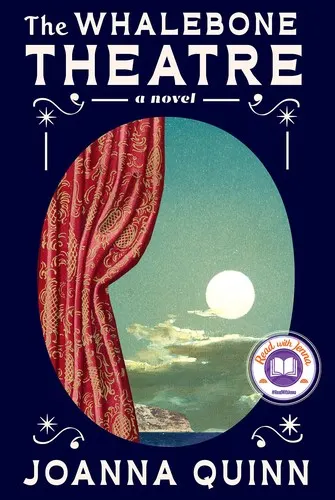
A whale washes onto a Dorset beach, and a group of neglected children eventually transforms its skeleton into a theatre. That image captures the novel’s exuberant spirit: when the adult world offers too little, its young characters build something larger, stranger, and freer for themselves.
Quinn’s assured debut has Great Circle’s headlong storytelling pleasure—the crowded household, vivid supporting cast, sudden comedy, emotional reversals, and a heroine who treats convention as an obstacle rather than a law. Its theatricality also echoes Shipstead’s interest in performance as both liberation and disguise. This is the choice for anyone who finished Great Circle wishing another large-hearted, immersive saga would immediately carry them away.
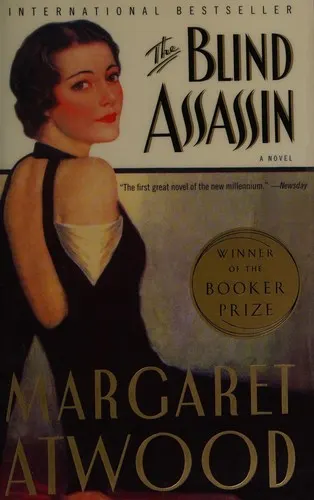
Atwood begins with a death reported as an accident, then lets an elderly woman prise apart the official version of her family’s history. Newspaper clippings, memoir, and a scandalous novel-within-the-novel compete to determine what happened and who gets believed.
That architecture will speak directly to readers captivated by Great Circle’s Marian-and-Hadley design. Both novels ask how women are converted into images—heiress, victim, actress, legend—and how art can reveal a truth while also falsifying it. The Blind Assassin is darker and more acidly funny, its revelations engineered with extraordinary precision. Its Booker Prize was deserved: few novels make the struggle over who controls a life story feel so intimate, suspenseful, and consequential.